11 Stunning Perennial Flower Bed Designs You Haven’t Thought Of (Yet!)

Play Game

Crafting an exquisite perennial flower bed arrangement doesn’t have to be daunting—or pricey. The key to a remarkable, impactful garden lies not just in selecting attractive blooms; it’s about combining them effectively. When you match perennials with vibrant color contrasts, harmonious heights, and similar growing conditions, you’ll create a flower bed that nearly manages itself—no uncertainties, no struggling flora, and no squandered funds on plants that won’t endure.

In this manual, you’ll discover 11 pre-designed perennial garden pairings aimed at optimal beauty with minimal labor. Whether you favor deep purples and whites, vivid reds and golds, or gentle cottage pastels, these pre-arranged beds simplify the process of creating a breathtaking garden that returns season after season. No need for a landscaper.

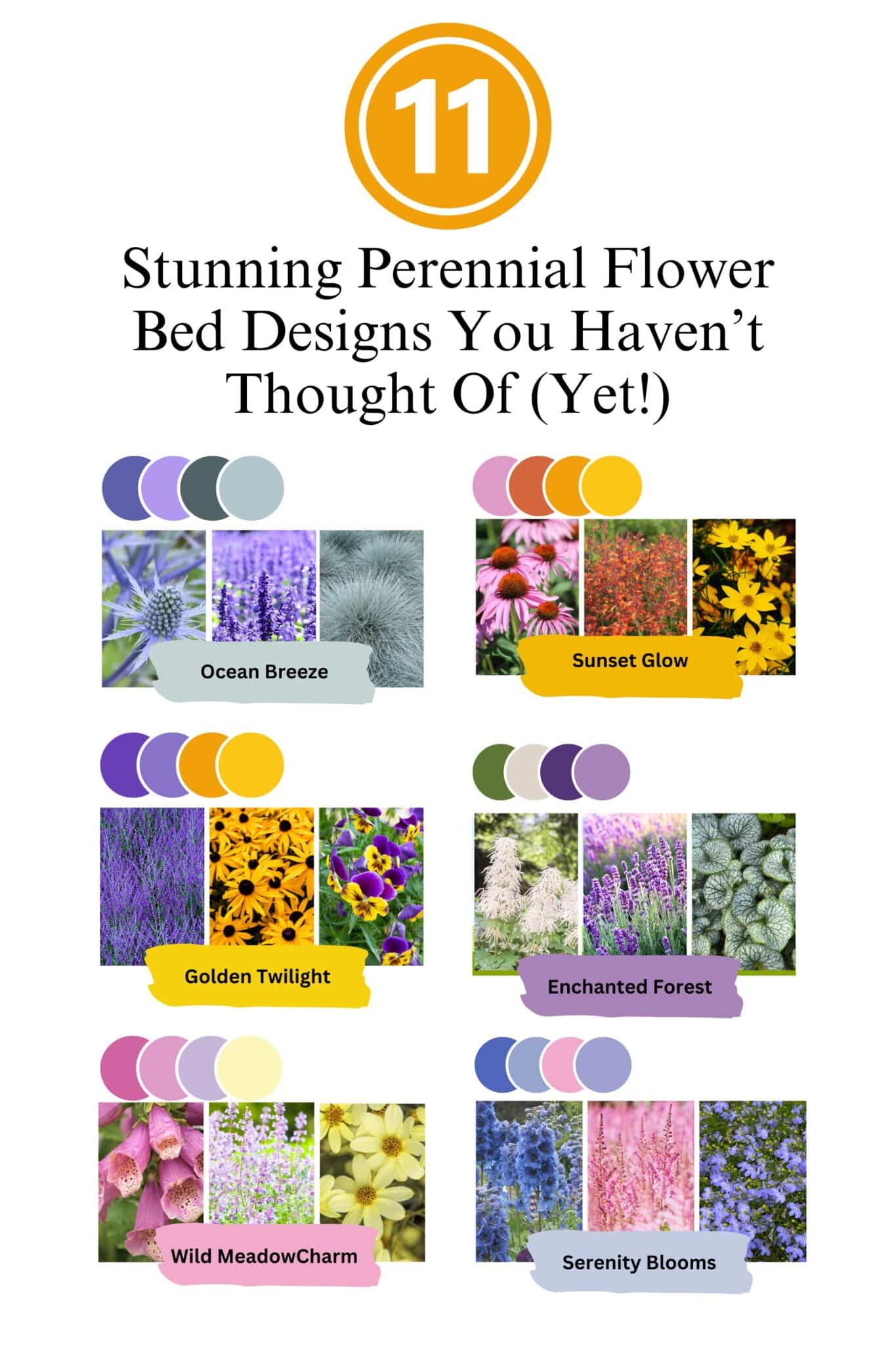
An image with 6 different Perennial Flower Bed Designs used as an example of mood and color.

How to Use This Guide

This manual is crafted to eliminate uncertainty from designing a gorgeous, flourishing perennial flower bed by furnishing pre-assembled plant pairings that harmonize in color and growing conditions.

Each mini garden has been meticulously curated with:

  • Stunning color contrasts to foster visual appeal throughout the growing season.
  • Plants with aligned needs—allowing them to thrive collectively without excessive upkeep.
  • A variety of heights—with taller varieties positioned at the back, mid-height ones at the center, and shorter types at the front for a well-organized and layered appearance.
  • Beginner-friendly perennials that are easy to maintain, long-blooming, and dependable year after year.

Choosing the Ideal Garden for Your Space

Prior to planting, take into account these essential factors to ensure the finest outcomes:

  1. Light Conditions – Each mini garden is labeled for full sun, partial shade, or shade. Opt for a combination that corresponds with your garden’s light availability.
  2. Soil Type – Some flora flourish in rich, moist soil, while others favor dry, sandy conditions. Select a garden that fits your natural soil, or be ready to amend it.
  3. Water Requirements – To simplify maintenance, each combination features plants with similar watering needs. Grouping drought-tolerant species together minimizes watering efforts, while moisture-loving ones guarantee lush growth.
  4. USDA Hardiness Zones – Verify the zones indicated for each mini garden to confirm that the plants will endure in your climate year after year.

Getting Started

Once you’ve selected a combination that fits your area, follow these steps:

  1. Prepare the Soil – Eliminate weeds, loosen the ground, and incorporate compost if necessary. If drainage is inadequate, consider slightly elevating the bed.
  2. Arrange the Plants – Place the tallest plants at the back, mid-height varieties in the center, and shorter ones in the front to create a natural progression.
  3. Plant and Water – Dig holes slightly larger than each plant’s root system, insert them, and fill with soil. Water deeply to assist plants in establishing.
  4. Mulch and Maintain – Apply a layer of mulch to retain moisture and suppress weeds. Water as needed and deadhead flowers to promote continuous blooming.

Using This Guide for Inspiration

This manual features 11 creative perennial flower bed designs, but you’re not obligated to adhere to them strictly. Use them as a foundation and:

  • Combine and match plants from various themes to create a garden that showcases your individual style.
  • Expand the designs by repeating plant groupings for a more pronounced effect in larger areas.
  • Add companion plants like ornamental grasses or small bushes to introduce texture and structure.

Adhering to these pre-planned combinations can yield a gorgeous, well-balanced perennial flower bed without the necessity for trial and error.

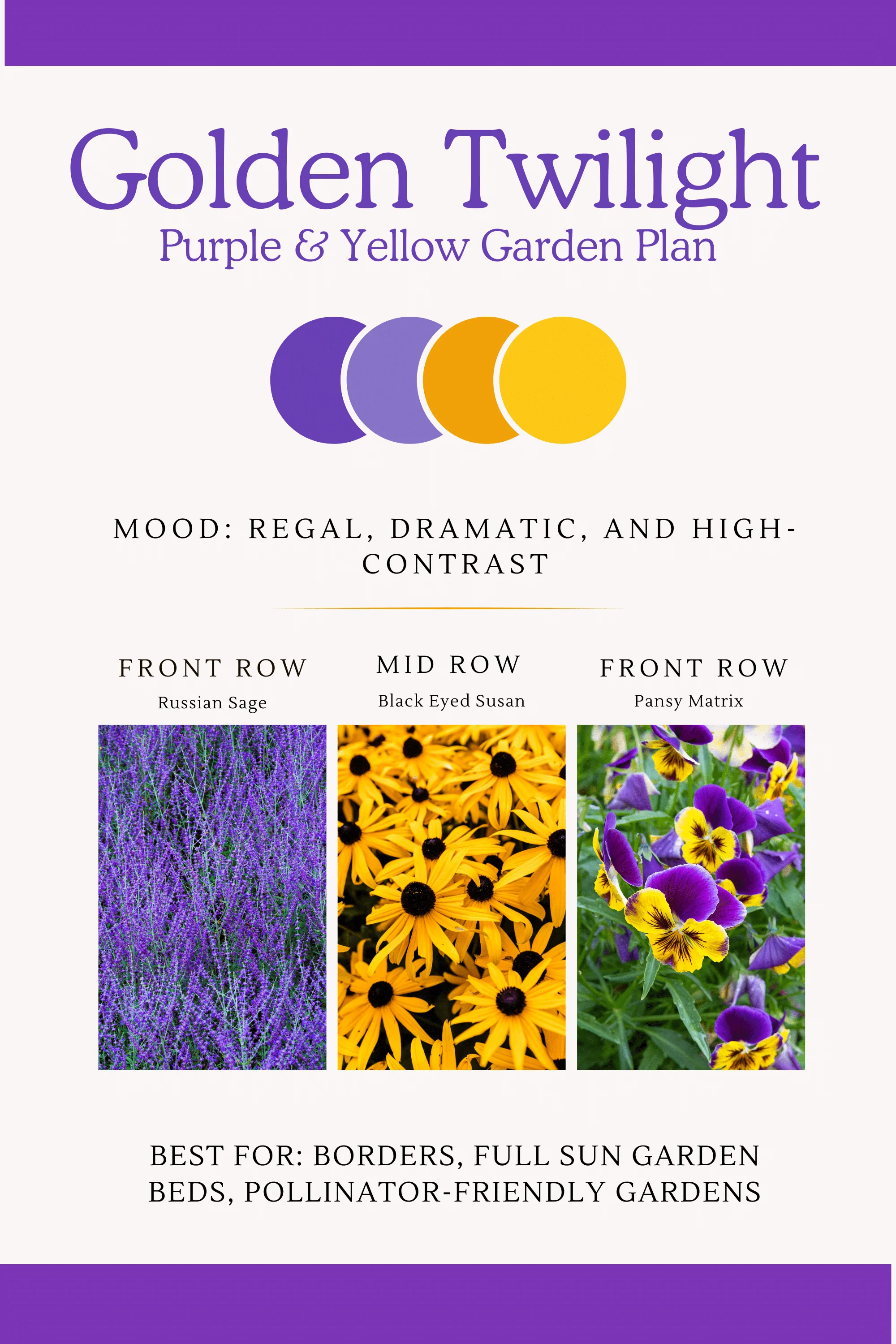
1. Golden Twilight (Purple & Yellow Garden)

Mood: Majestic, dramatic, and high-contrast
Best for: Borders, full sun garden beds, pollinator-friendly gardens

Flower Combinations

  • Tall Back: Russian Sage (Perovskia atriplicifolia) – Perennial, Zones 4-9
  • Mid-Height: Black-Eyed Susan (Rudbeckia fulgida) – Perennial, Zones 3-9
  • Front/Border: Creeping Jenny ‘Aurea’ (Lysimachia nummularia) – Perennial, Zones 3-9

Care Guide

Light: Full sun (6+ hours)
Water: Low to moderate; drought-resistant once established
Soil: Well-drained, average to sandy soil
Fertilization: Light feeding in spring with compost or slow-release fertilizer

Pro Tips

Uses:

Black-eyed Susans serve as remarkable cut flowers, and Russian Sage draws in pollinators. Creeping Jenny functions effectively as ground cover and beautifully spills over raised beds.

Where to position: Perfect for warm, arid locations, alongside pathways, or in cottage-style gardens.

Infographic showcasing purple and yellow perennial flower bed arrangements with a majestic, dramatic, and high-contrast appeal.

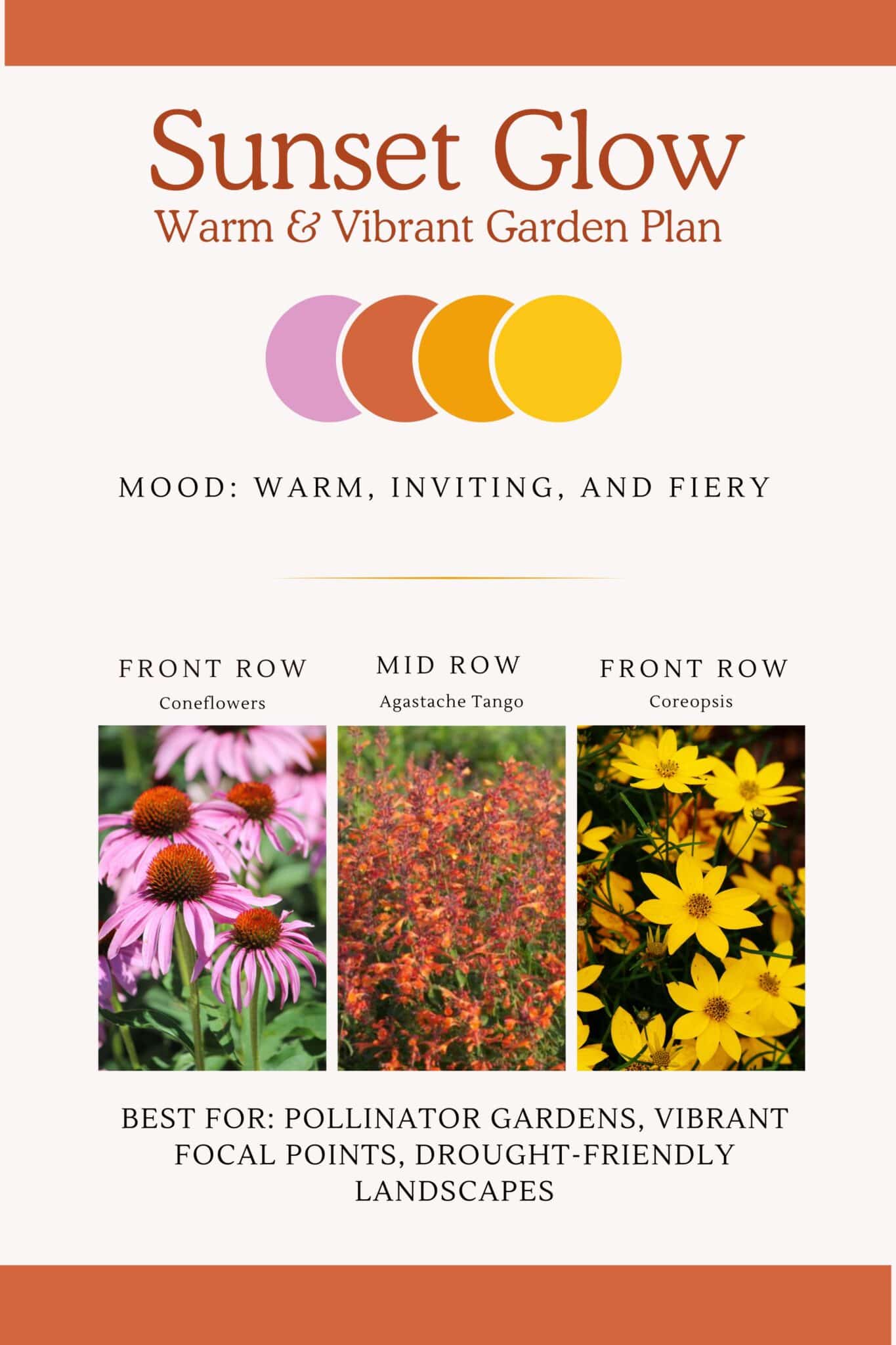
2. Sunset Glow (Orange & Purple Garden)

Atmosphere: Cozy, welcoming, and fiery
Ideal for: Pollinator spaces, vibrant focal areas, drought-resistant landscapes

Floral Arrangements

  • Tall Background: Purple Coneflower (Echinacea ‘Magnus’) – Perennial, Zones 3-9
  • Mid-Height: Agastache ‘Tango’ (Hyssop) – Perennial, Zones 5-9
  • Front/Border: Coreopsis ‘Zagreb’ (Tickseed) – Perennial, Zones 4-9

Maintenance Guide

  • Light: Full sun (6+ hours)
  • Water: Minimal; drought-resistant once settled
  • Soil: Well-ventilated, average to sandy soil
  • Fertilization: Light nourishment in spring with compost or slow-release fertilizer

Expert Advice

  • Where to position: Perfect for sunny, warm borders, elevated beds, or beside garden pathways.
  • Applications:
    • Purple Coneflowers draw in pollinators and are fantastic cut flowers.
    • Agastache’s bright orange blossoms contribute a fiery flair and attract hummingbirds.
    • Coreopsis ‘Zagreb’ establishes a glowing golden front edge with enduring blooms.

This design emphasizes the warm hues of a sunset while preserving height and color harmony, forming a captivating yet easy-to-maintain garden bed.

Infographic displaying pink, orange, and yellow perennial flower bed designs with a warm & vibrant essence.

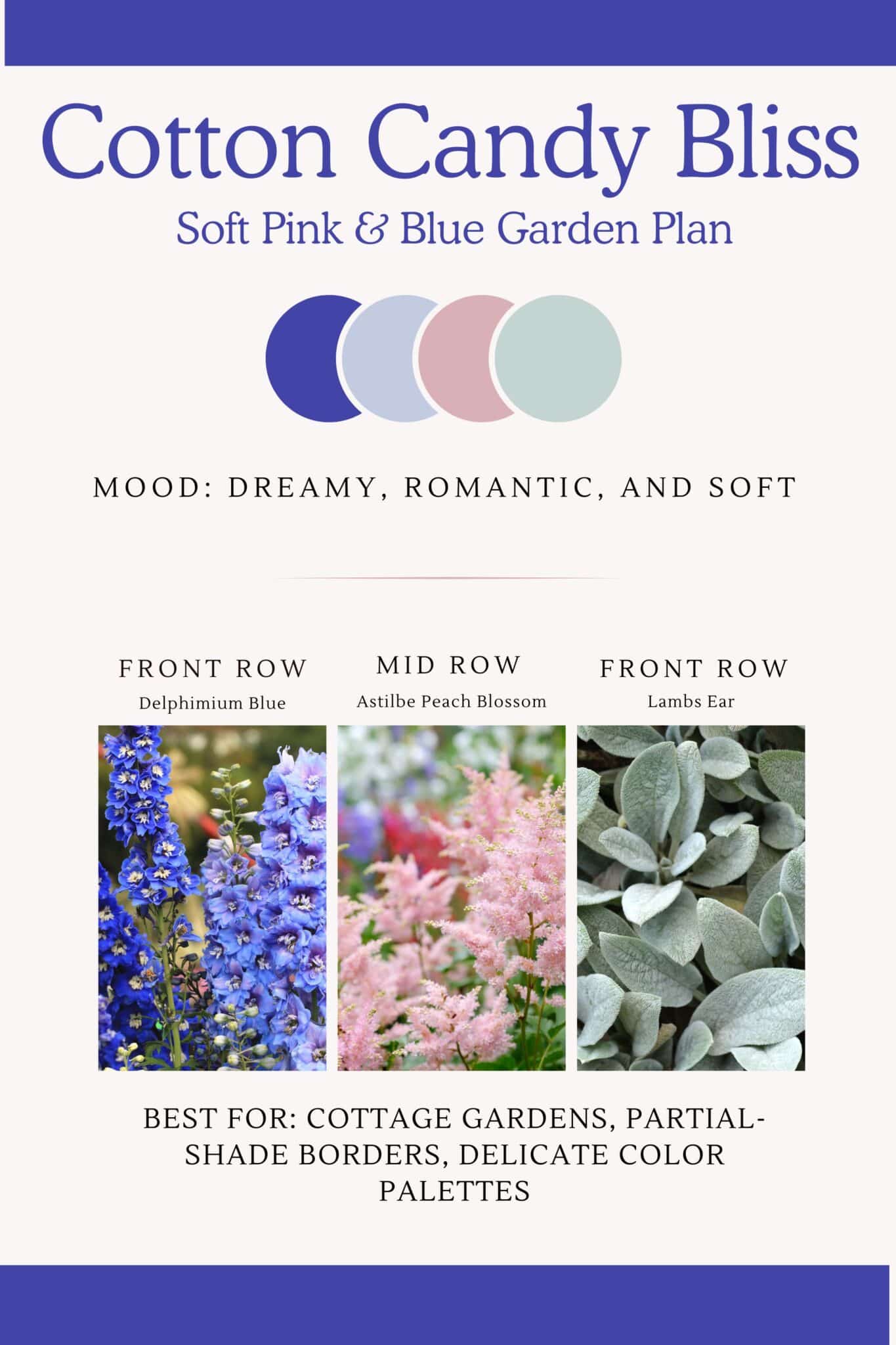
3. Cotton Candy Bliss (Soft Pink & Blue Garden)

Atmosphere: Ethereal, romantic, and gentle
Ideal for: Cottage landscapes, partially shaded borders, delicate color schemes

Floral Arrangements

  • Tall Background: Delphinium ‘Blue Butterfly’ – Perennial, Zones 3-7
  • Mid-Height: Astilbe ‘Peach Blossom’ – Perennial, Zones 4-9
  • Front/Border: Lamb’s Ear (Stachys byzantina) – Perennial, Zones 4-8

Maintenance Guide

Light: Full sun to partial shade
Water: Moderate; prefers steady moisture, particularly Astilbe
Soil: Rich, well-draining, slightly acidic to neutral soil
Fertilization: Spring nourishment with compost or balanced fertilizer

Expert Advice

  • Where to position: Best in beds receiving morning sunlight and afternoon shade, adjacent to pathways
  • where texture can be valued.
  • Applications: Delphiniums and astilbe serve as remarkable cut flowers. Lamb’s ear is an exceptional textural plant that creates gentle borders.
Infographic that illustrates pink, soft blues and green perennial flower bed design with a gentle and dreamy romantic atmosphere.

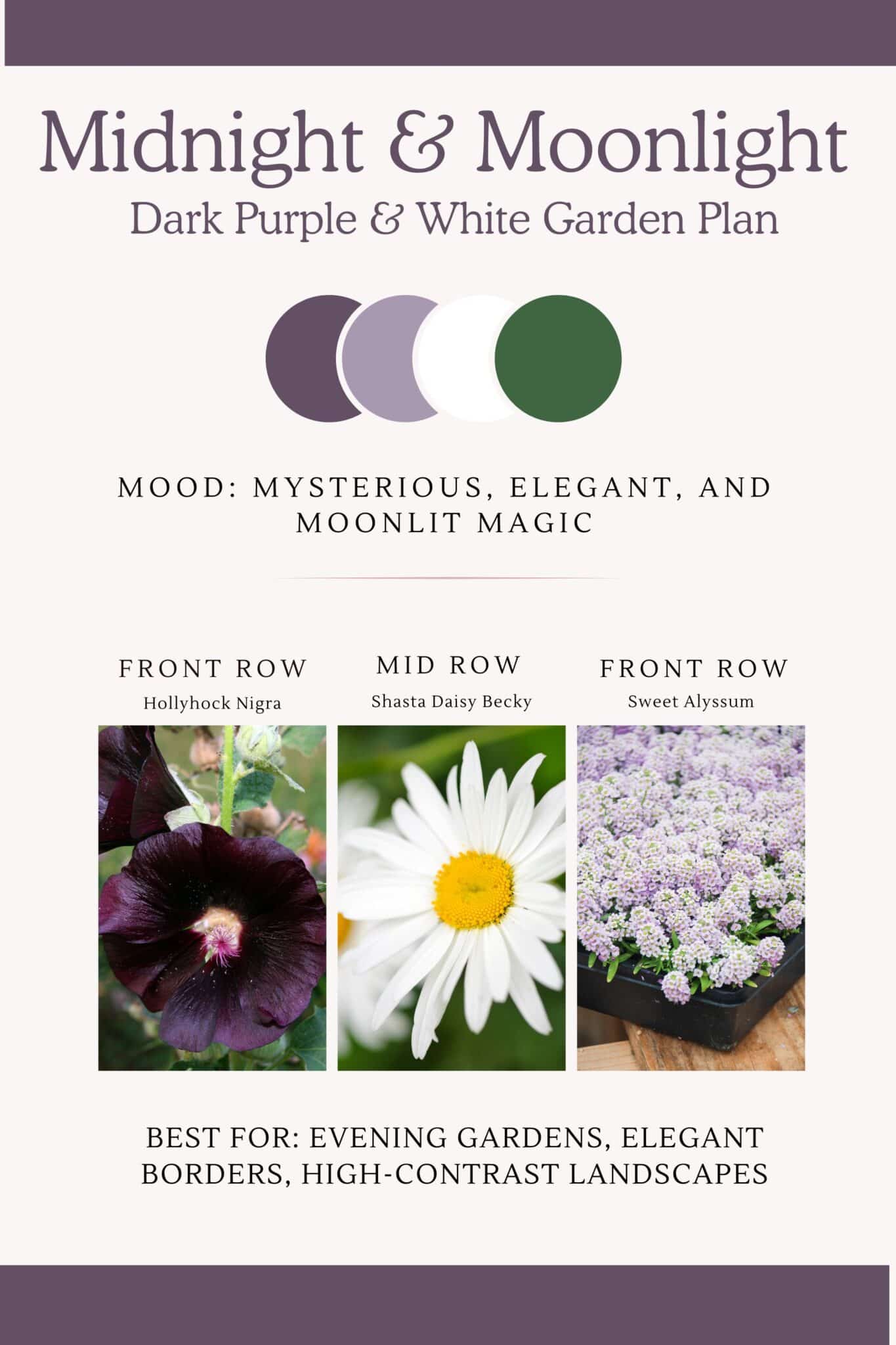
4. Midnight & Moonlight (Dark Purple & White Garden)

Atmosphere: Enigmatic, sophisticated, and moonlit charm
Optimal for: Nighttime gardens, refined borders, high-contrast settings

Flower Pairings

  • Tall Background: Hollyhock ‘Nigra’ – Perennial, Zones 3-8
  • Medium Height: Shasta Daisy ‘Becky’ – Perennial, Zones 4-9
  • Front/Edge: Sweet Alyssum ‘Snow Princess’ – Annual in most regions

Maintenance Guide

Light: Full sunlight to partial shade
Water: Moderate; well-draining soil is preferred
Soil: Neutral to slightly alkaline, average fertility
Fertilization: Spring nourishment with compost, deadhead daisies for ongoing blooms

Expert Advice

  • Ideal planting location: Best placed near patios or pathways where white flowers can reflect moonlight.
  • Applications: Hollyhocks offer excellent vertical appeal, daisies are superb cut flowers, and alyssum adds fragrance.
Infographic that illustrates dark purple and white perennial flower bed design with a magical and elegant moonlight atmosphere.

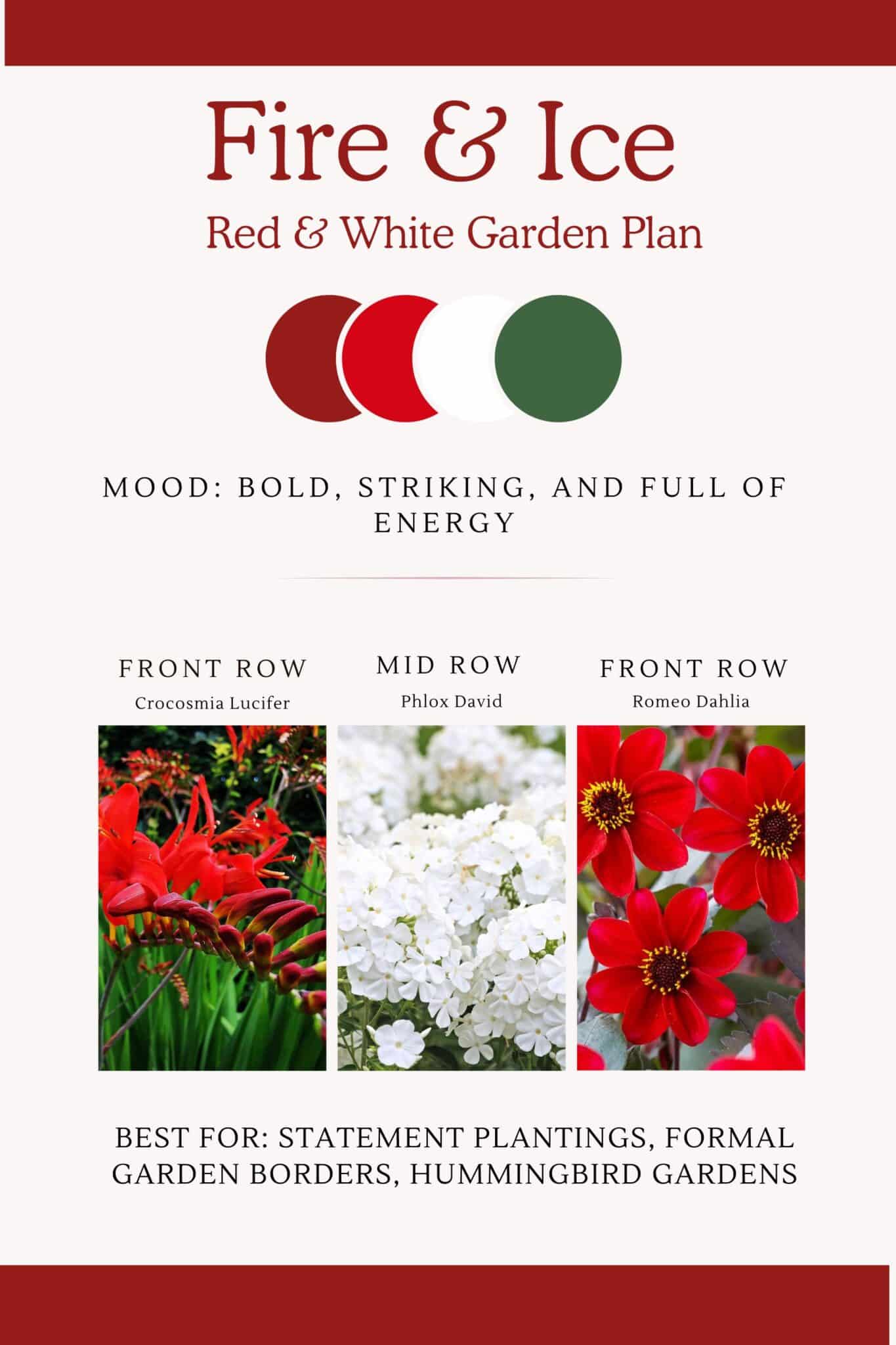
5. Fire & Ice (Red & White Garden)

Vibe: Vibrant, eye-catching, and full of vitality
Optimal for: Eye-catching plant arrangements, formal garden boundaries, gardens for hummingbirds

Flower Pairings

  • Tall Background: Crocosmia ‘Lucifer’ – Perennial, Zones 5-9
  • Medium Height: White Phlox ‘David’ – Perennial, Zones 4-8
  • Front/Edge: Romeo Dahlia – Annual in cooler regions

Maintenance Guide

Light: Full sun
Water: Moderate; prefers consistent moisture
Soil: Well-draining, nutrient-rich soil
Fertilization: Regularly feed with a balanced fertilizer, especially for phlox

Expert Advice

  • Ideal planting location: Perfect for mixed perennial borders or adjacent to seating areas for a striking impression.
  • Applications: Phlox and dianthus serve as superb cut flowers. Crocosmia invites hummingbirds.

class=”wp-block-separator has-alpha-channel-opacity”/>

Infographic featuring vibrant deep reds, whites, and rich green flower bed design. This layout is bold, impactful, and teeming with vitality.

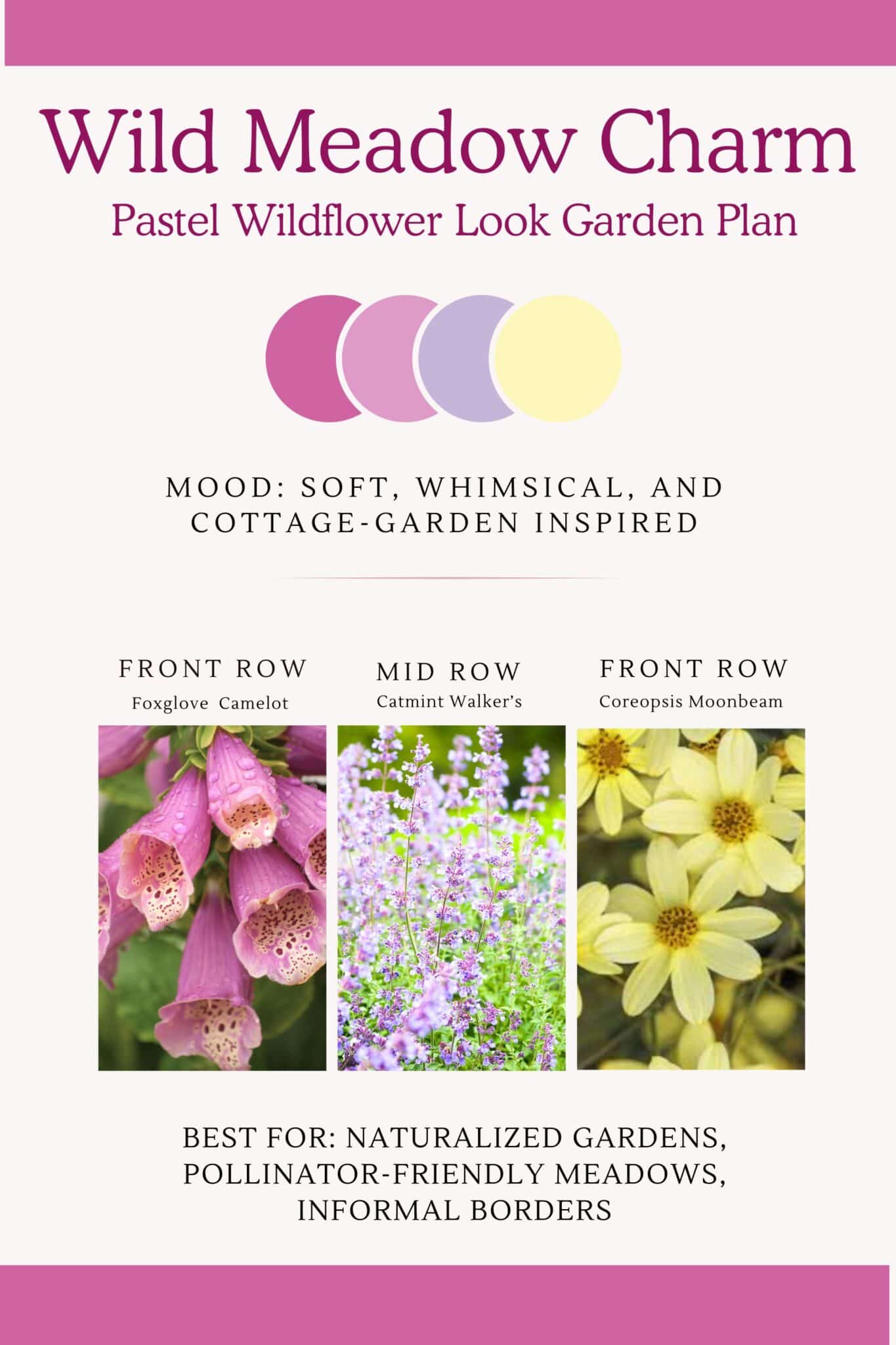
6. Wild Meadow Allure (Pastel Wildflower Aesthetic)

Mood: Gentle, fanciful, and cottage-garden themed
Ideal for: Natural gardens, pollinator-friendly meadows, casual borders

Floral Arrangements

  • Tall Back: Foxglove ‘Camelot Rose’ – Biennial, Zones 4-9
  • Mid-Height: Catmint ‘Walker’s Low’ – Perennial, Zones 3-8
  • Front/Border: Coreopsis ‘Moonbeam’ – Perennial, Zones 4-9

Maintenance Guide

Light: Full sun to partial shade
Water: Low to moderate; drought-resistant once established
Soil: Well-draining, adaptable to various conditions
Fertilization: Light nourishment in spring with compost

Expert Advice

  • Planting Locations: Excellent along fences, paths, or informal garden areas.
  • Uses: Coreopsis can be cut for blooms repeatedly. Catmint is resistant to deer and serves well as edging. Foxgloves attract pollinators but should be positioned where pets and children can’t access them, as they are poisonous.
Perennial flower bed layout with soft pastel pinks, purples, and yellows offering a gentle, fanciful, and cottage garden aesthetic.

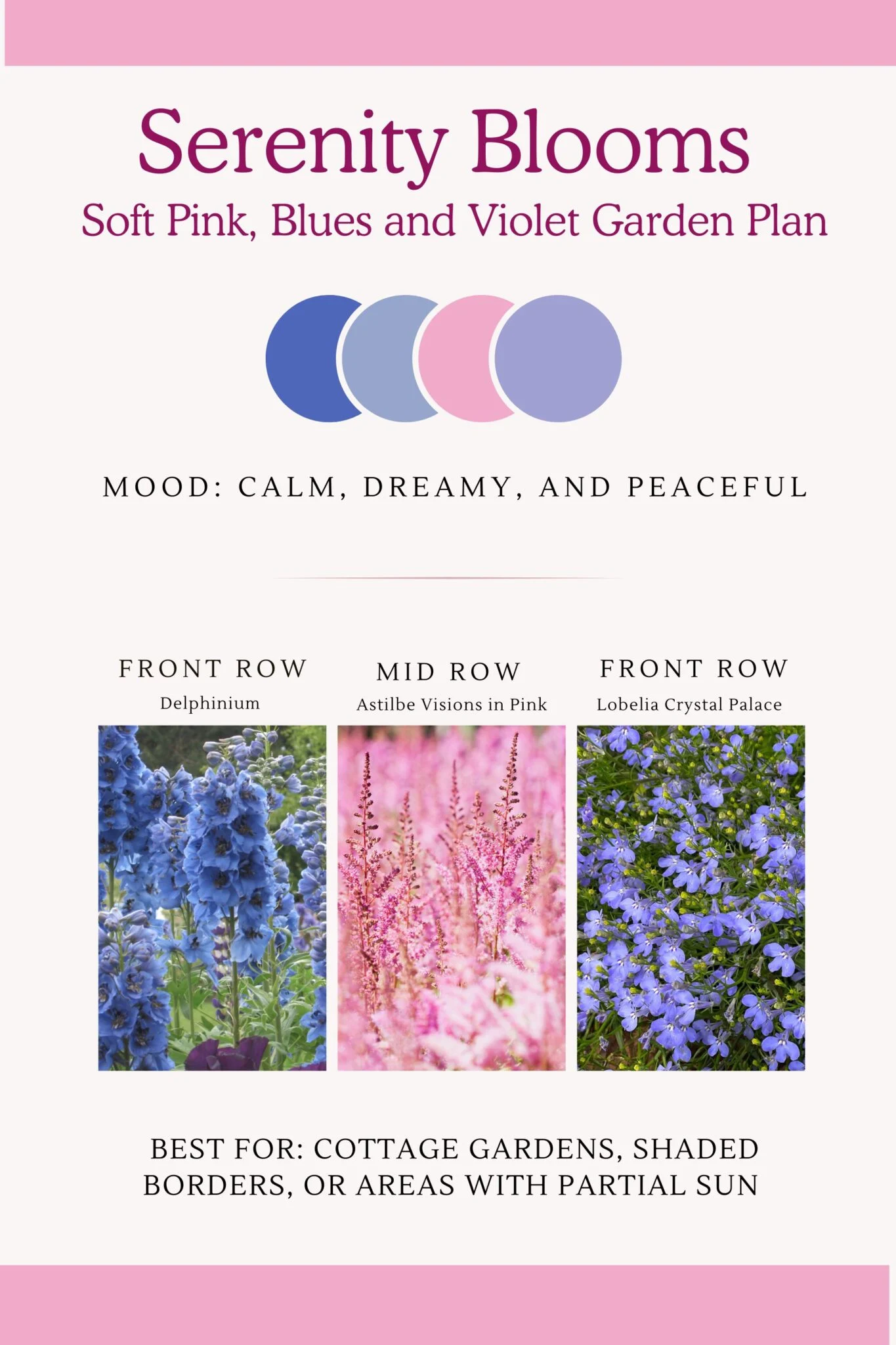
7. Serenity Blossom (Soft Pink, Blue & Violet Garden)

Mood: Tranquil, dreamy, and serene
Perfect for: Cottage gardens, shaded borders, or areas receiving partial to full sunlight

Floral Arrangements

  • Tall Back: Delphinium ‘Blue Butterfly’ – Perennial, Zones 3–7
  • Mid-Height: Astilbe ‘Visions in Pink’ – Perennial, Zones 4–9
  • Front/Border: Lobelia erinus ‘Crystal Palace’ – Annual in most zones

Maintenance Guide

  • Light: Full sun to partial shade (Astilbe enjoys some afternoon shade in warmer climates)
  • Water: Moderate; ensure the soil remains uniformly moist, particularly for Astilbe
  • Soil: Fertile, well-drained soil with added organic matter
  • Fertilization: Light nourishment in spring using compost or balanced fertilizer

Expert Advice

  • Location for planting: Perfect for shaded terraces, along walkways, or as a serene centerpiece in your garden.
  • Applications:
    • Delphinium: Brings verticality, grace, and vibrant blue hues to enhance the layout.
    • Astilbe: Offers delicate pink plumes that coordinate beautifully with the cooler shades.
    • Lobelia: Forms a lush, cascading ground cover with rich violet-blue blossoms, contributing richness and contrast to the paler shades.
Infographic that shows soft pinks, blues and violet perennial flower bed design  with a calm and peaceful feel.

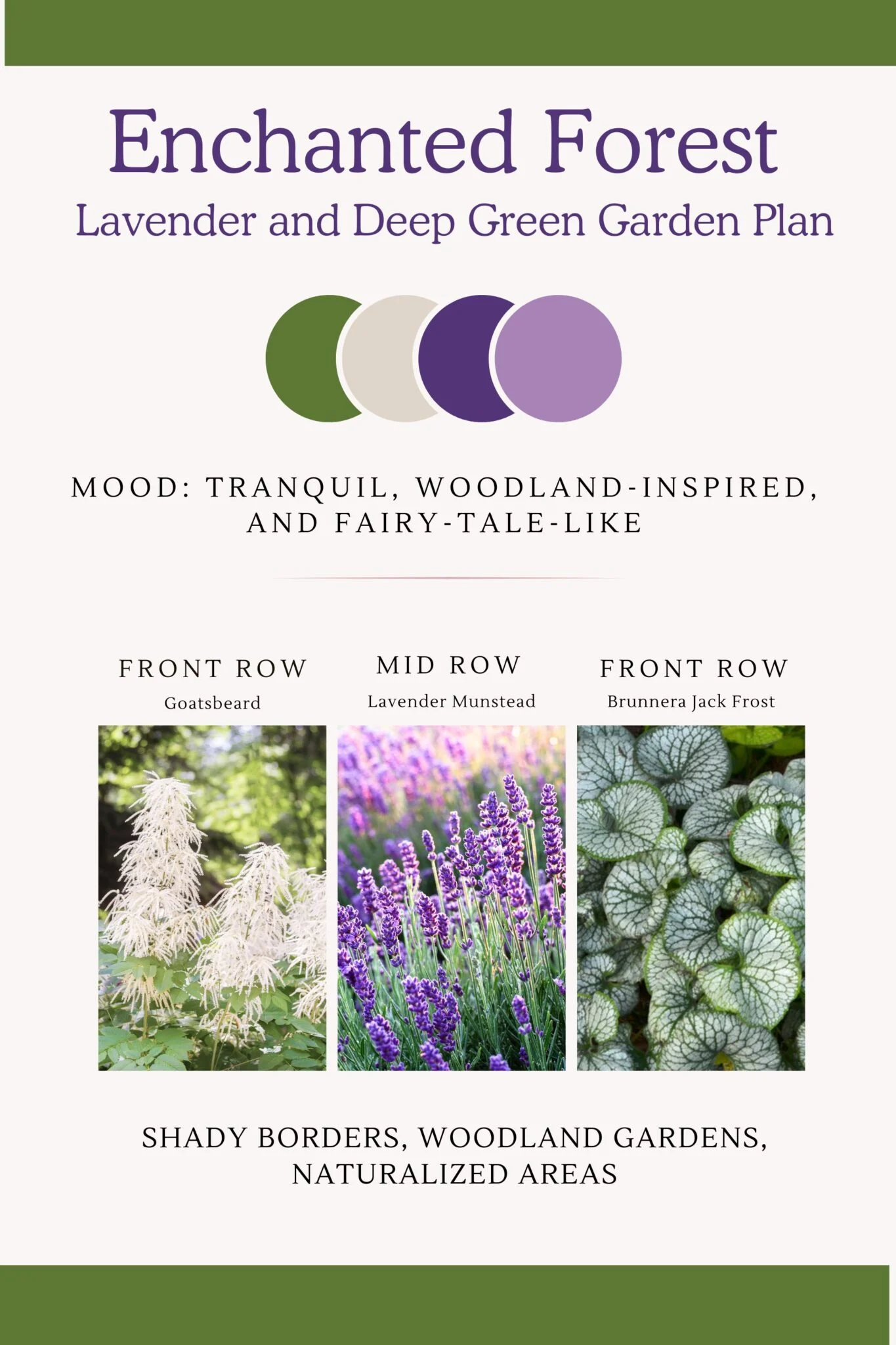
8. Enchanted Forest (Deep Greens & Soft Lavender)

Atmosphere: Serene, forest-inspired, and fairy-tale-like
Optimal for: Shaded borders, woodland gardens, natural areas

Floral Combinations

  • Tall Back: Goatsbeard (Aruncus dioicus) – Perennial, Zones 3-8
  • Mid-Height: Lavender ‘Munstead’ – Perennial, Zones 5-9
  • Front/Border: Brunnera ‘Jack Frost’ – Perennial, Zones 3-8

Maintenance Guide

Light: Partial shade to full shade
Water: Moderate; favors consistently moist soil
Soil: Fertile, well-draining, slightly acidic to neutral
Fertilization: Spring compost or light organic nourishment

Expert Tips

  • Location for planting: Ideal for woodland peripheries, mottled shade beneath trees, or alongside shaded paths.
  • Applications: The silver foliage of Brunnera imparts a luminous quality in low light, while lavender can be gathered for cooking and aromatic purposes.
Infographic that shows dark purple Deep greens and soft whites perennial flower bed design  with a tranquil, woodland inspired feel.

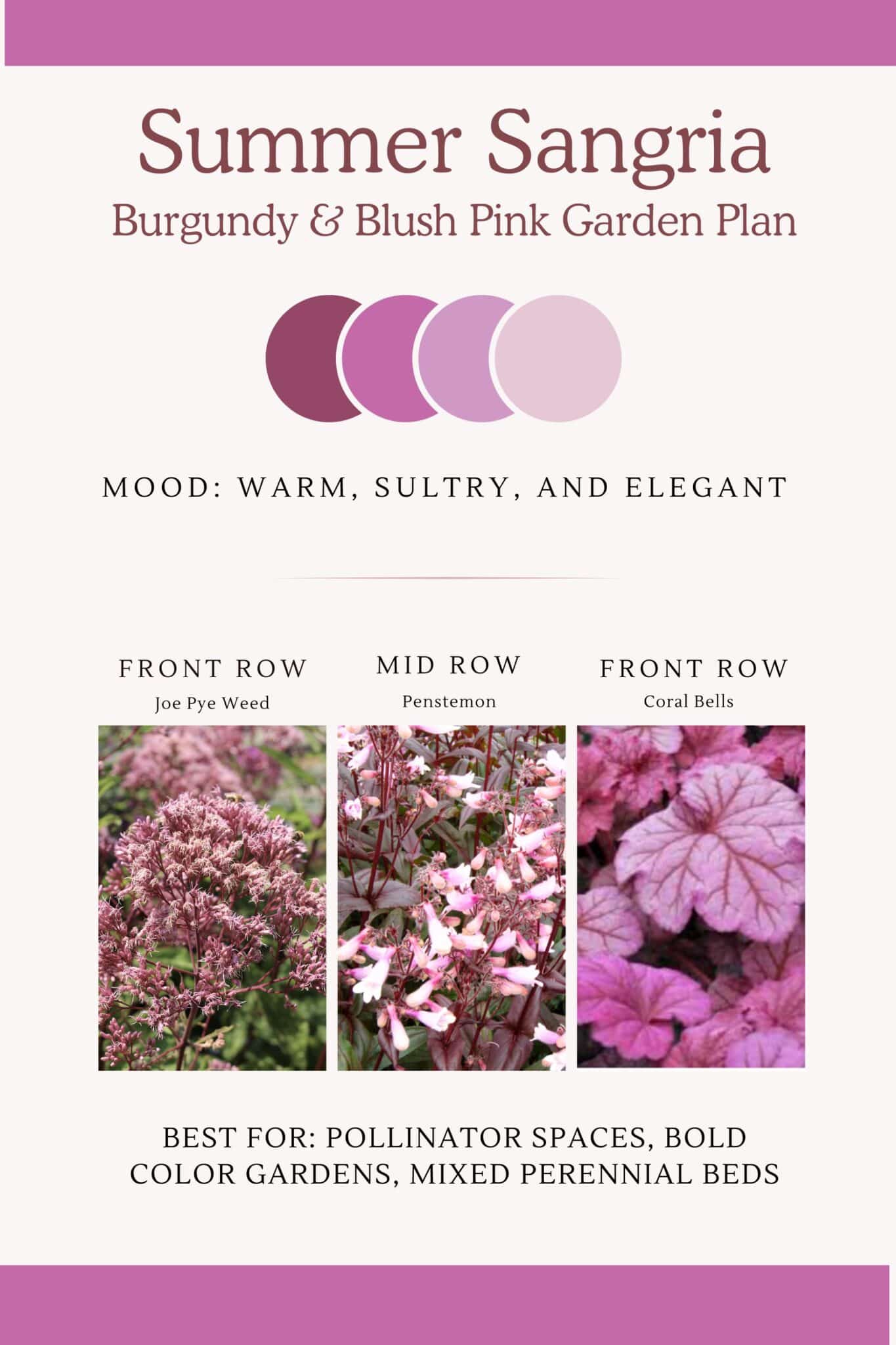
9. Summer Sangria (Burgundy & Blush Pink Garden)

Atmosphere: Warm, sultry, and sophisticated
Optimal for: Pollinator-friendly areas, vibrant color gardens, mixed perennial beds

Floral Combinations

  • Tall Back: Joe Pye Weed (Eutrochium purpureum) – Perennial, Zones 4-9
  • Mid-Height: Penstemon ‘Dark Towers’ – Perennial, Zones 3-8
  • Front/Border: Coral Bells ‘Berry Smoothie’ – Perennial, Zones 4-9

Maintenance Guide

Light:

Full sun to partial shade
Water: Moderate; favors steady moisture
Soil: Well-drained, average to rich soil
Fertilization: Light nourishment in spring with compost or balanced fertilizer

Pro Tips

  • Where to plant: Thrives in mixed borders or group plantings for rich color contrast.
  • Uses: Penstemon and Joe Pye Weed draw in pollinators. Coral Bells’ vibrant foliage adds visual appeal even in the absence of blooms.

Infographic that shows deep reds and pink perennial flower bed design with a warm, sultry and elegant look.

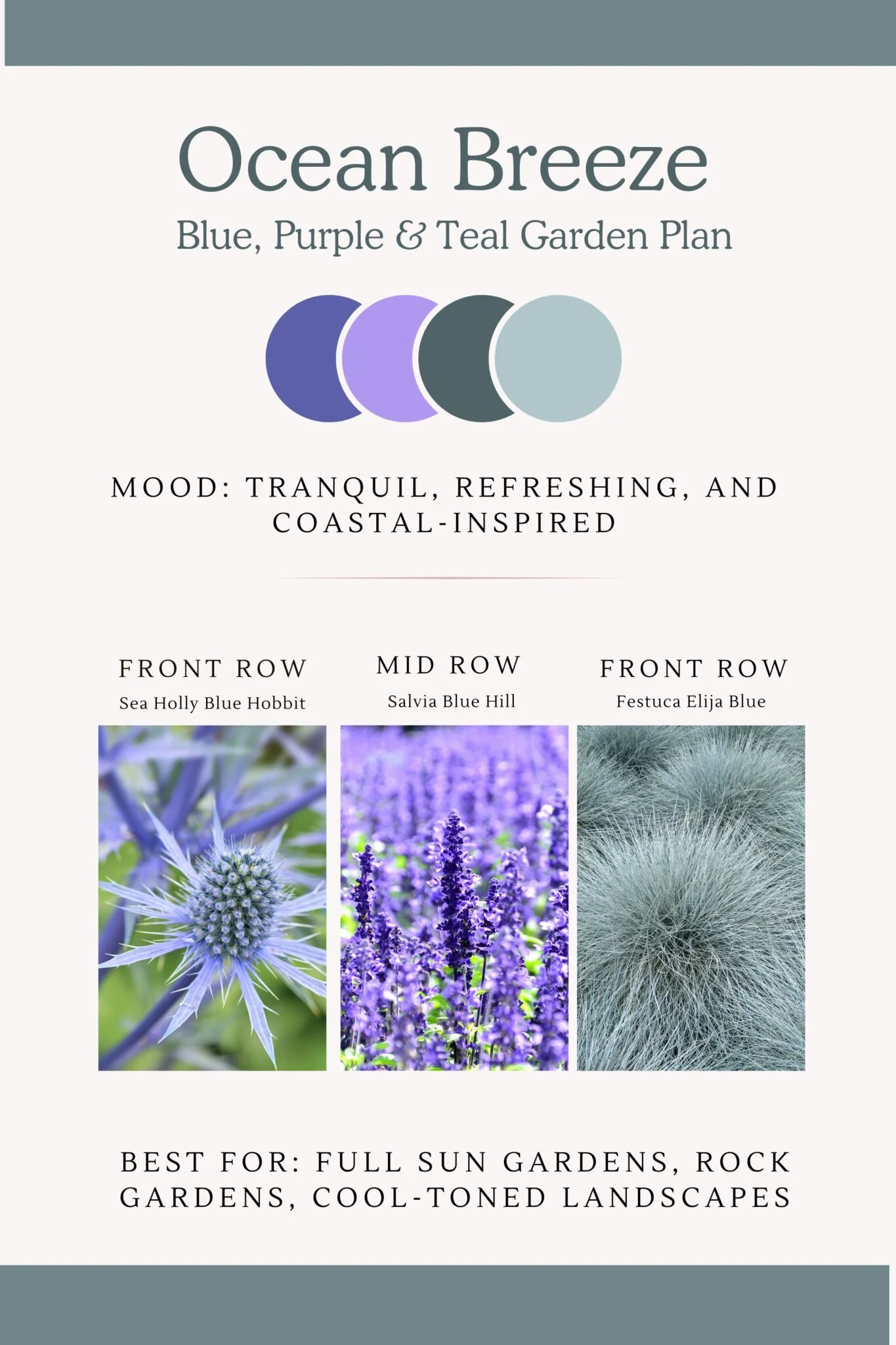
10. Ocean Breeze (Cool Blue, Purple & Teal Garden)

Mood: Calm, refreshing, and inspired by the coast
Best for: Full sun gardens, rock gardens, cool-toned landscapes

Flower Combinations

  • Tall Back: Sea Holly (Eryngium planum ‘Blue Hobbit’) – Perennial, Zones 4-9
  • Mid-Height: Salvia ‘Blue Hill’ – Perennial, Zones 4-8
  • Front/Border: Festuca ‘Elijah Blue’ (Blue Fescue Grass) – Perennial, Zones 4-9

Care Guide

  • Light: Full sun
  • Water: Low to moderate; drought-resistant once established
  • Soil: Well-draining, sandy or loamy soil
  • Fertilization: Minimal; a light compost top-dressing in spring is adequate

Pro Tips

  • Where to plant: Suitable for contemporary landscapes, coastal gardens, or xeriscapes.
  • Uses: Sea Holly’s spiky blue flowers add texture, Salvia attracts pollinators, and Festuca’s soft blue leaves offer year-round interest.
Infographic with cool toned violets, greens and teals for a tranquil and coastal inspired vibe.

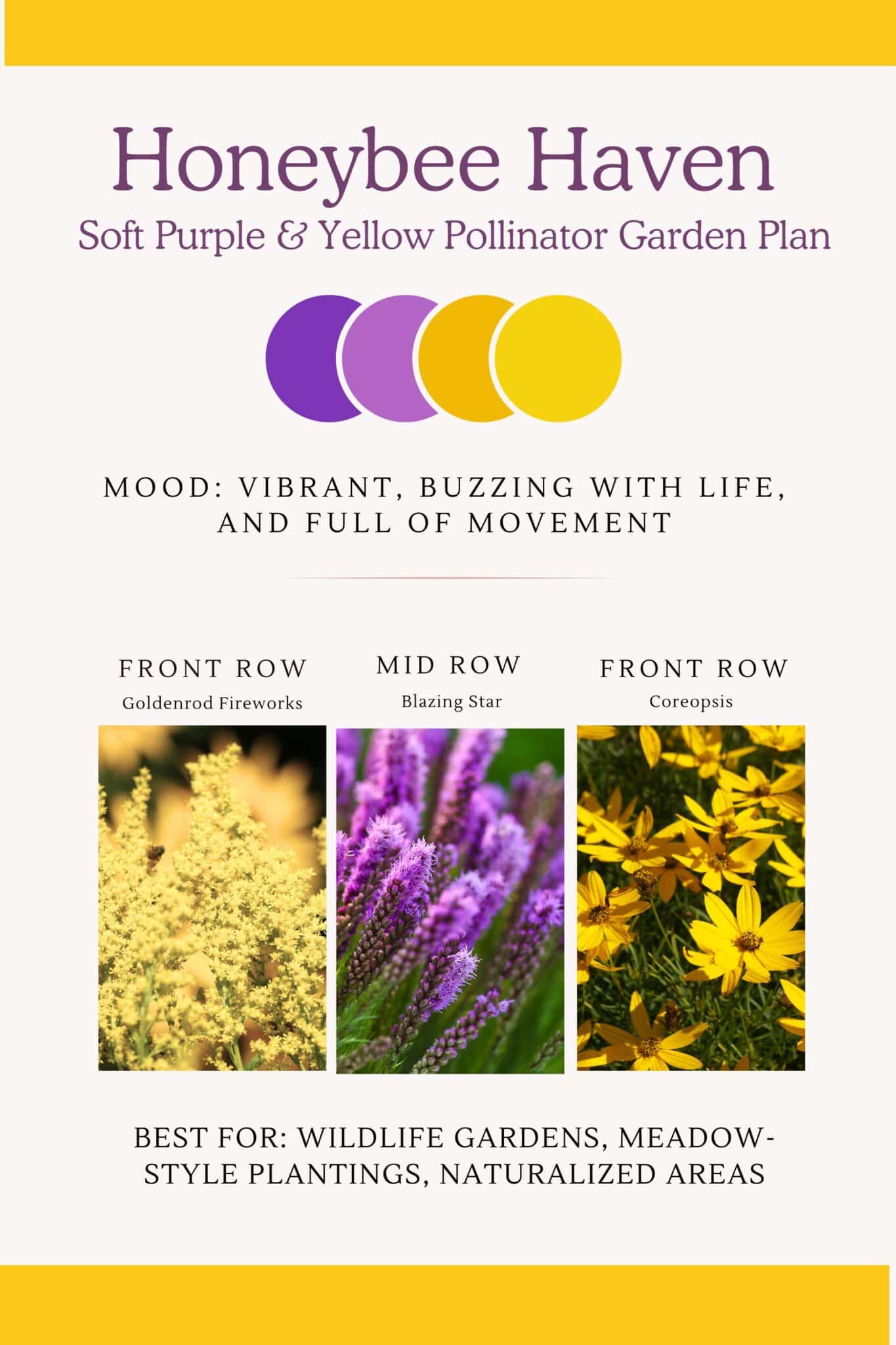
11. Honeybee Haven (Yellow & Soft Purple Pollinator Garden)

Mood: Lively, buzzing with energy, and filled with motion
Best for: Wildlife gardens, meadow-style plantings, naturalized zones

Flower Combinations

  • Tall Back: Goldenrod ‘Fireworks’ – Perennial, Zones 4-9
  • Mid-Height: Liatris spicata (Blazing Star) – Perennial, Zones 3-9
  • Front/Border:

    Coreopsis ‘Zagreb’ – Perennial, Zones 4-8

Maintenance Guide

Illumination: Full sunlight
Moisture: Low to moderate; drought-resistant once developed
Substrate: Well-draining, average to gritty soil
Nourishment: Light fertilization in spring, although not mandatory

Expert Recommendations

  • Planting locations: Perfect for wildflower fields, open garden plots, or alongside fences.
  • Applications: Goldenrod and Liatris are excellent attractors for pollinators. Catmint forms a gentle, flowing edge and is resistant to deer.
Honey bee haven inspired color palette for a garden bed that is vibrant and full of movement.

Stunning Perennial Flower Bed Designs That Feel Like Enchantment, Not A Puzzle

At this stage, you’ve acquired 11 breathtaking, perennial flower bed designs readily available—no second-guessing, no bizarre color mismatches, and no plants subtly perishing due to neighborly dislikes. Merely vibrant, well-proportioned flower beds that appear as if a professional was involved (but, spoiler alert: you managed it on your own).

If you’re feeling motivated yet pondering, “What about [insert your preferred colors here]?”—I’m here to assist. Leave a comment and let me know which color pairings you’re eager to explore next! I’m always excited to design additional pre-planned gardens or assist in resolving your dream flower bed challenges. Your garden should embody enchantment, not a puzzle, and I’m here to facilitate that.

Closeup of Laura.

Author: Laura Kennedy

Writer & Proprietor of Little Yellow Wheelbarrow

Laura is an adept gardener and passionate flower aficionado. In spite of her lighthearted struggle with plant spacing rules, Laura’s work encourages gardeners to cultivate flourishing, stunning areas that embody both imagination and sustainability.


Leave a Reply

Your email address will not be published. Required fields are marked *

Game Categories:  soin des fleurs