This article and pictures might incorporate Amazon or other affiliate links. Should you buy something through any link, I could receive a nominal commission at no additional cost to you. Any materials utilized may be provided to me at no expense; however, all projects and viewpoints expressed are my own.
Were you aware there’s a method to assess the pressure on conventional heat presses? Achieving the appropriate heat press pressure for your endeavor is crucial, particularly for specific blanks and materials.
No matter if you require light, medium, or heavy pressure for your project, I’m here to assist you in getting the pressure just right.
IMPORTANT: This procedure is intended for traditional heat presses, not for automatic presses that regulate pressure independently.
Pin
To assess your heat press pressure, all you require is a sheet of standard printer paper. The method is straightforward, and ensuring the right pressure will significantly affect the results, particularly with blanks and materials that need precise settings.
You can observe me guide you through the pressure adjustment process by pressing play on the video below.
Why is Heat Press Pressure Essential?
If you’ve solely dealt with t-shirts and HTV, you might question the significance of heat press pressure.
Some materials, like puff HTV, necessitate very robust, even pressure to yield optimal results.
If you plan to venture into White Toner transfers, sublimation, or other heat transfer endeavors, pressure is crucial. Excessive or insufficient pressure could lead to incomplete transfers, overcooking/undercooking the inks, or damaging the adhesives, among other issues.
Pressure is just as vital as time and temperature.
If you are operating an automatic press or a handheld press, your capacity to modify the pressure is constrained, and this method will not be suitable for measuring pressure.
How to Identify Heat Press Pressure
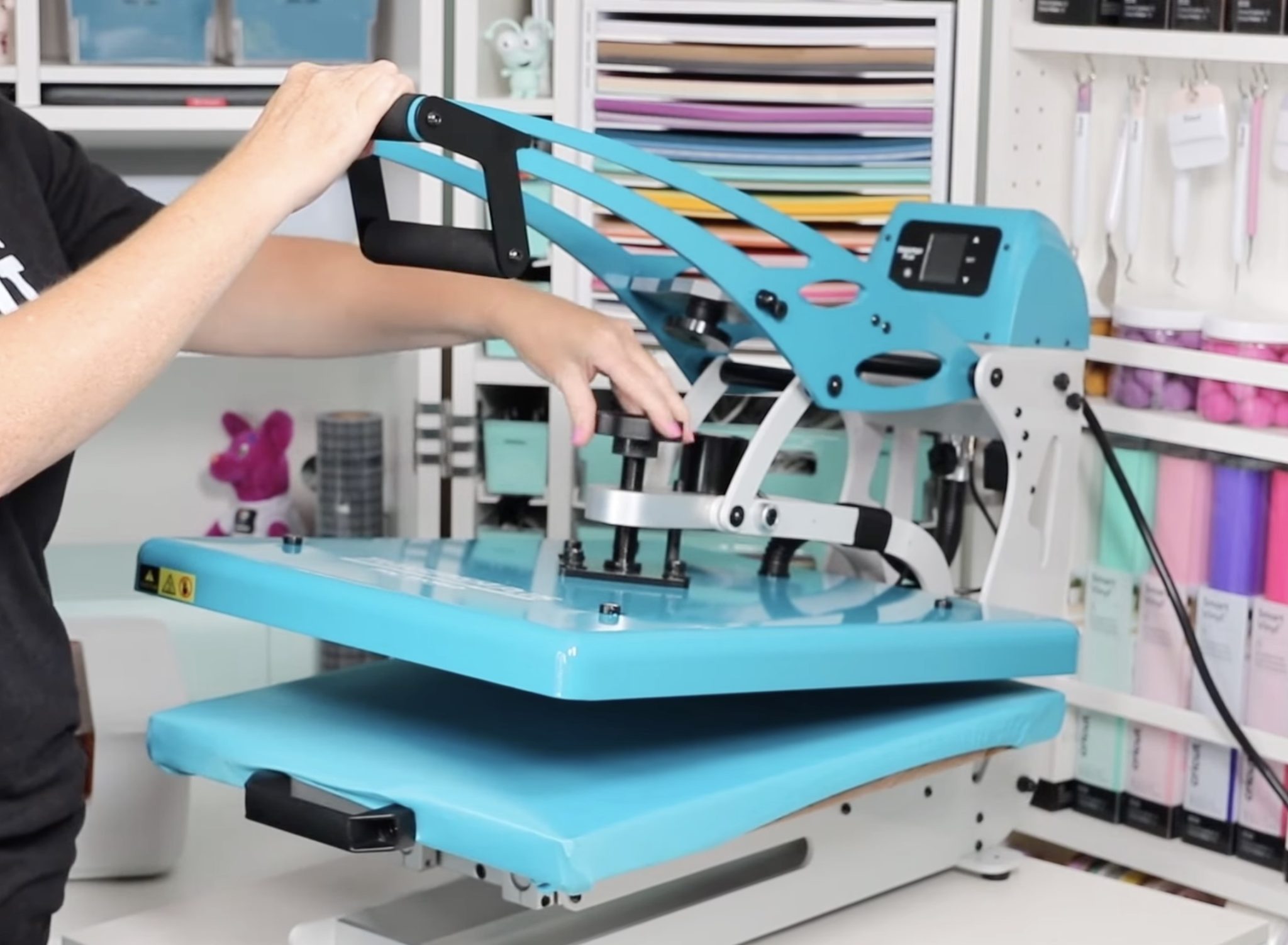
To ascertain the heat press pressure, we will utilize a piece of standard printer/copy paper. For many of the presses, you may not even need to have your press powered on or connected.
If your press features an auto-open mechanism, you might need to connect the press to activate the magnet so it remains closed.
This procedure allows you to experience what light, medium, and heavy pressure feels like. You will need to make adjustments for each blank and material you work with.
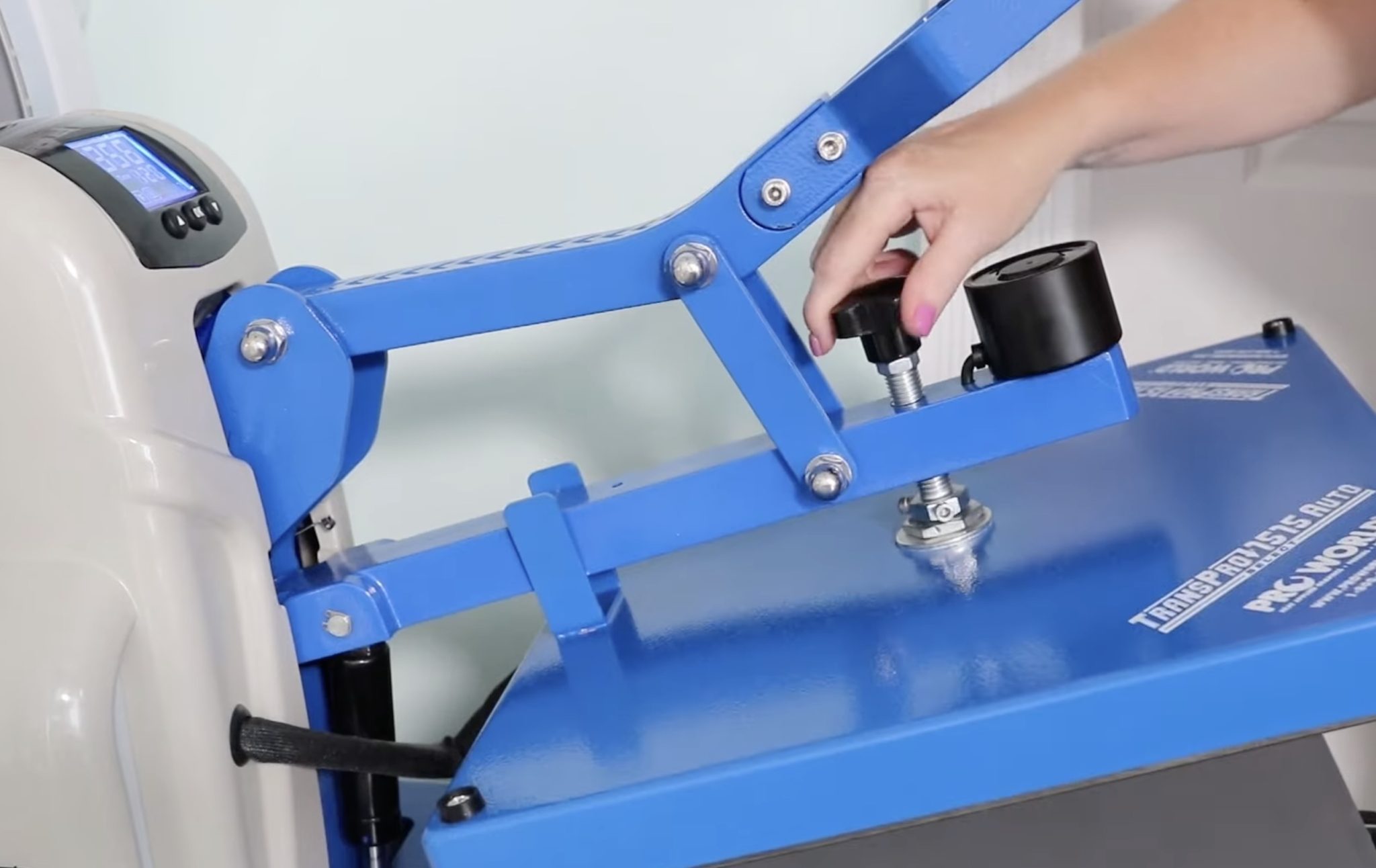
Step 1: Find the Pressure Adjustment Knob
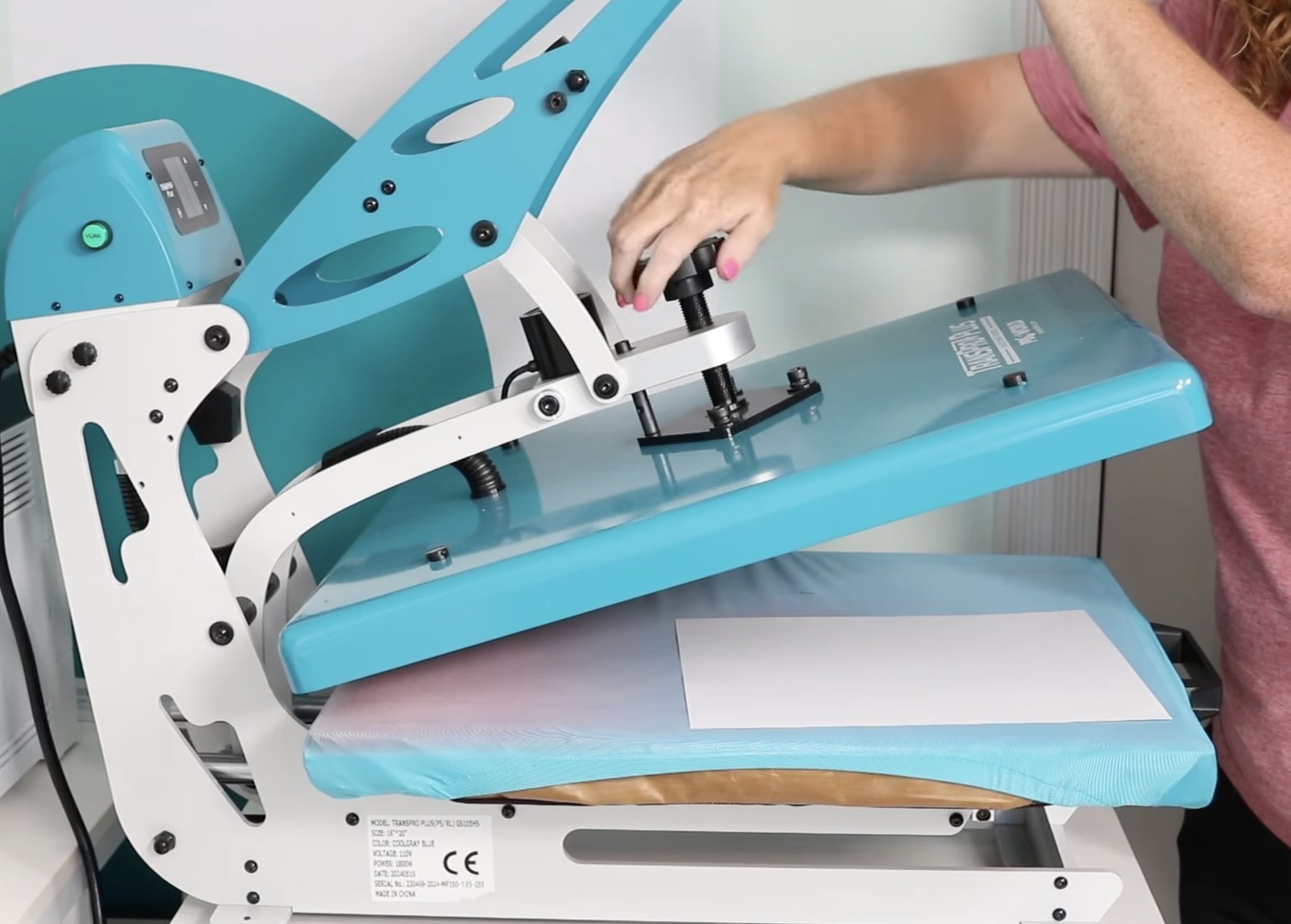
All traditional heat presses include an adjustment knob that can be tightened or loosened to modify the pressure. In my heat presses, that knob is located on the top.
Pin
Rotating the knob clockwise lowers the upper platen, heightening the pressure. Turning the knob counterclockwise elevates the upper platen, reducing the pressure.
Pin
Step 2: Conduct the Paper Test
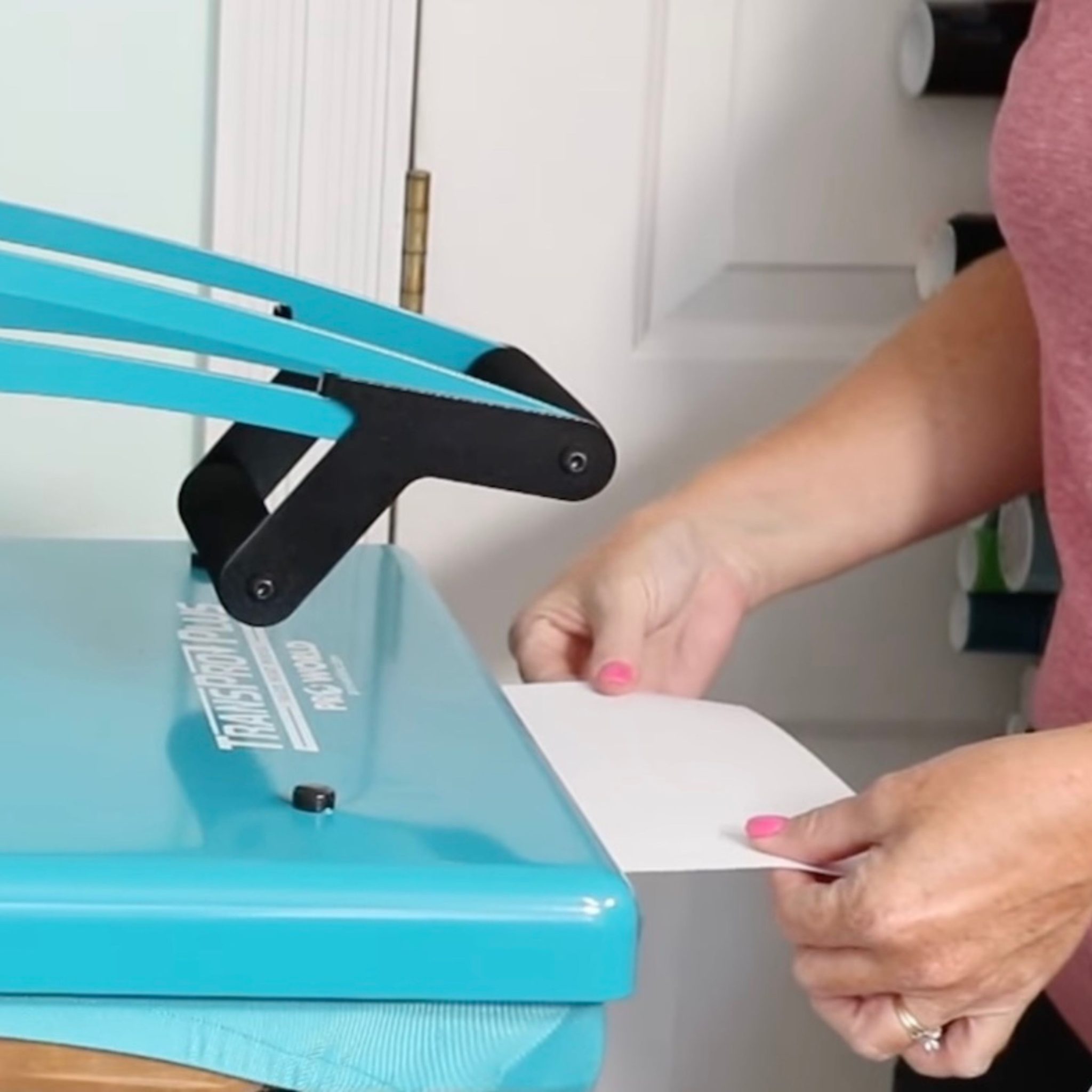
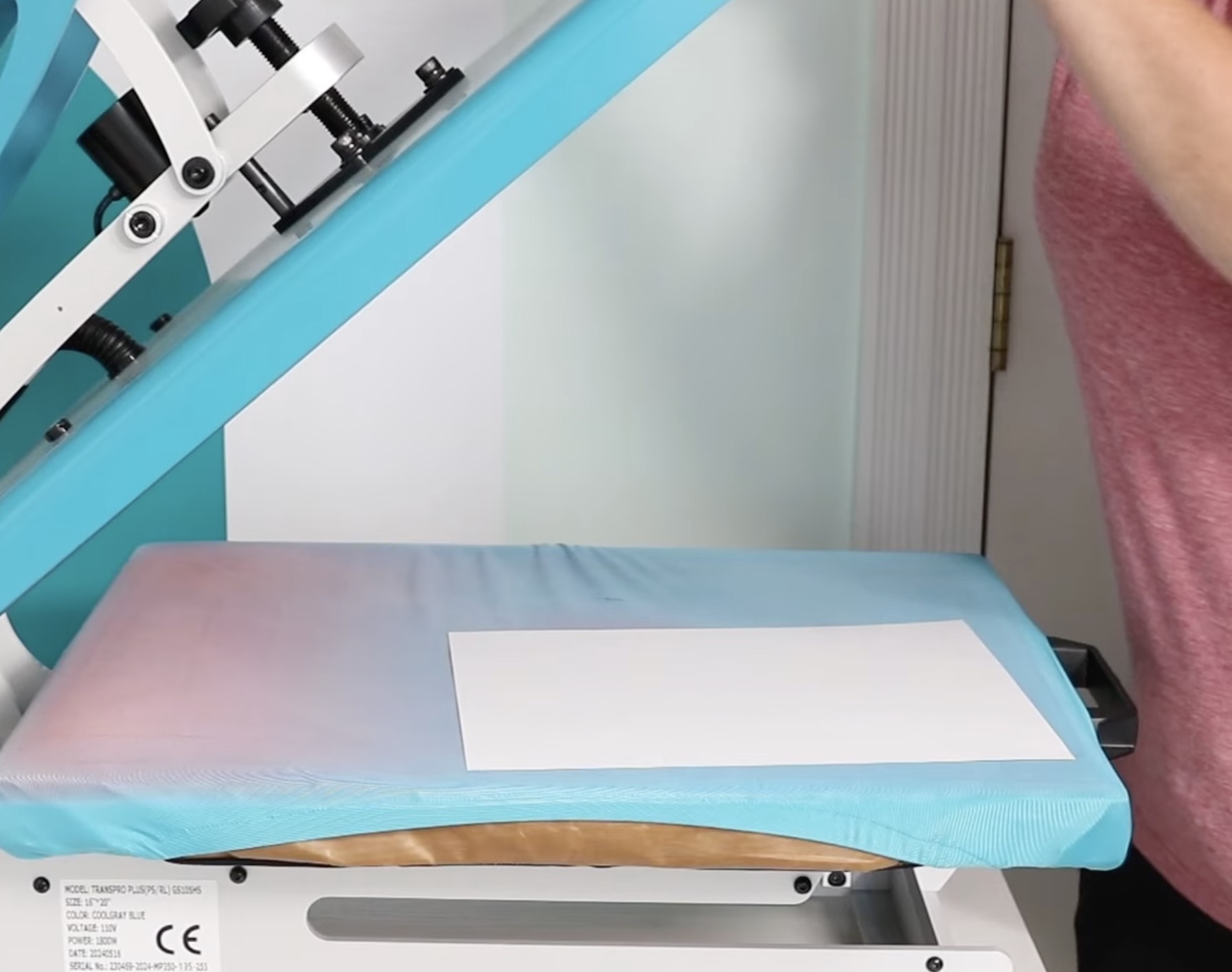
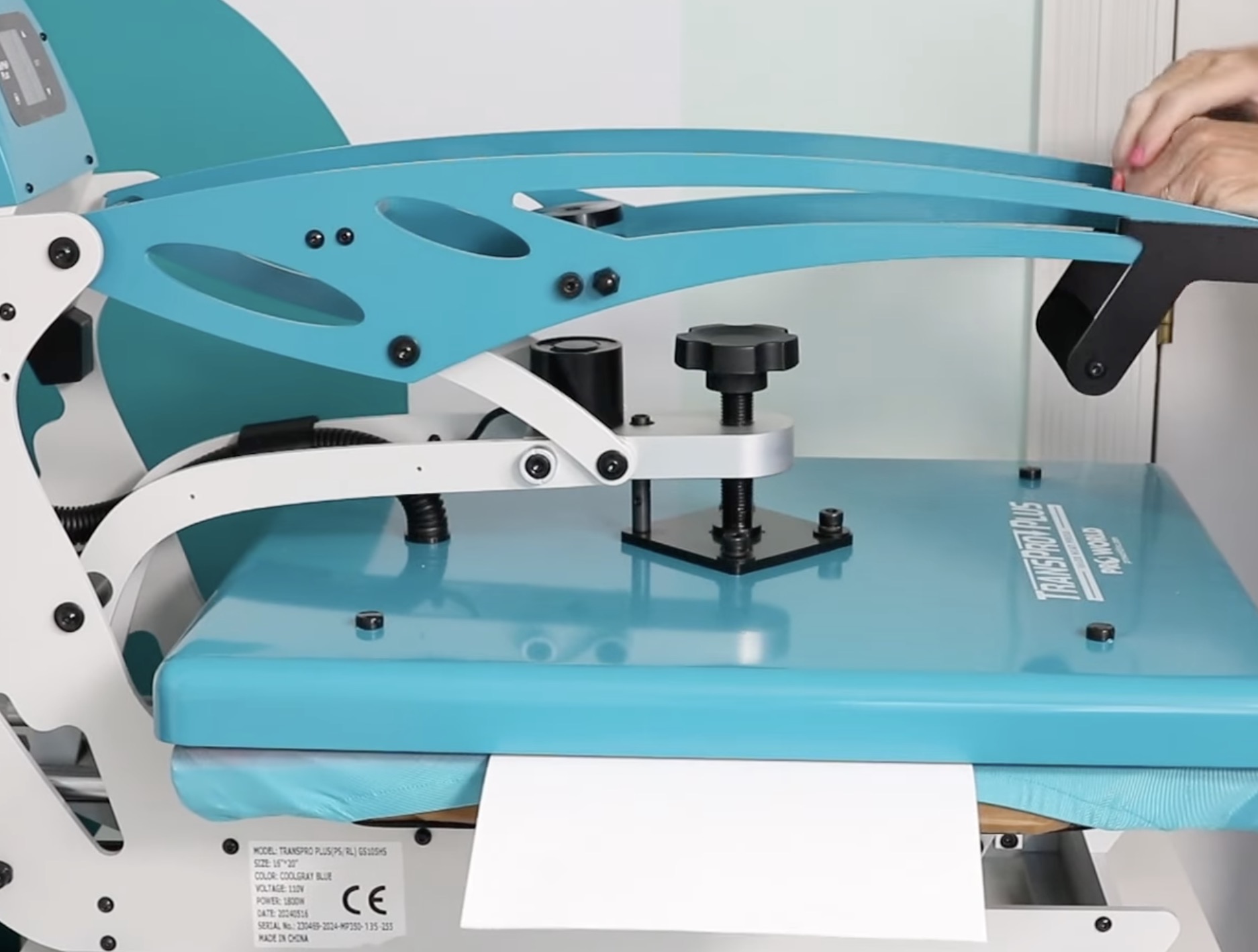
To familiarize yourself with what heavy pressure entails, we will position a sheet of paper at the front of the heat press, ensuring that a portion hangs out for easy access.
Pin
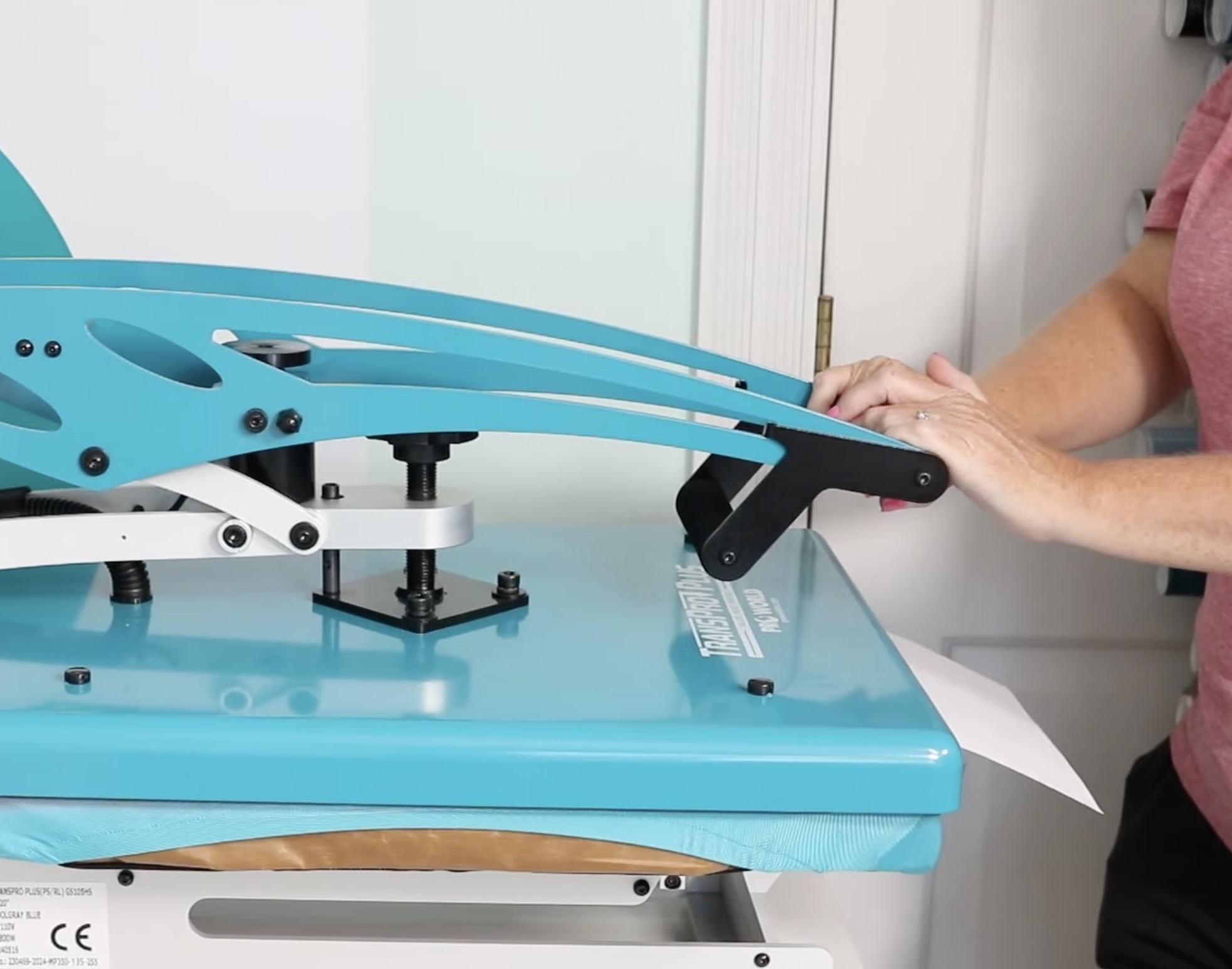
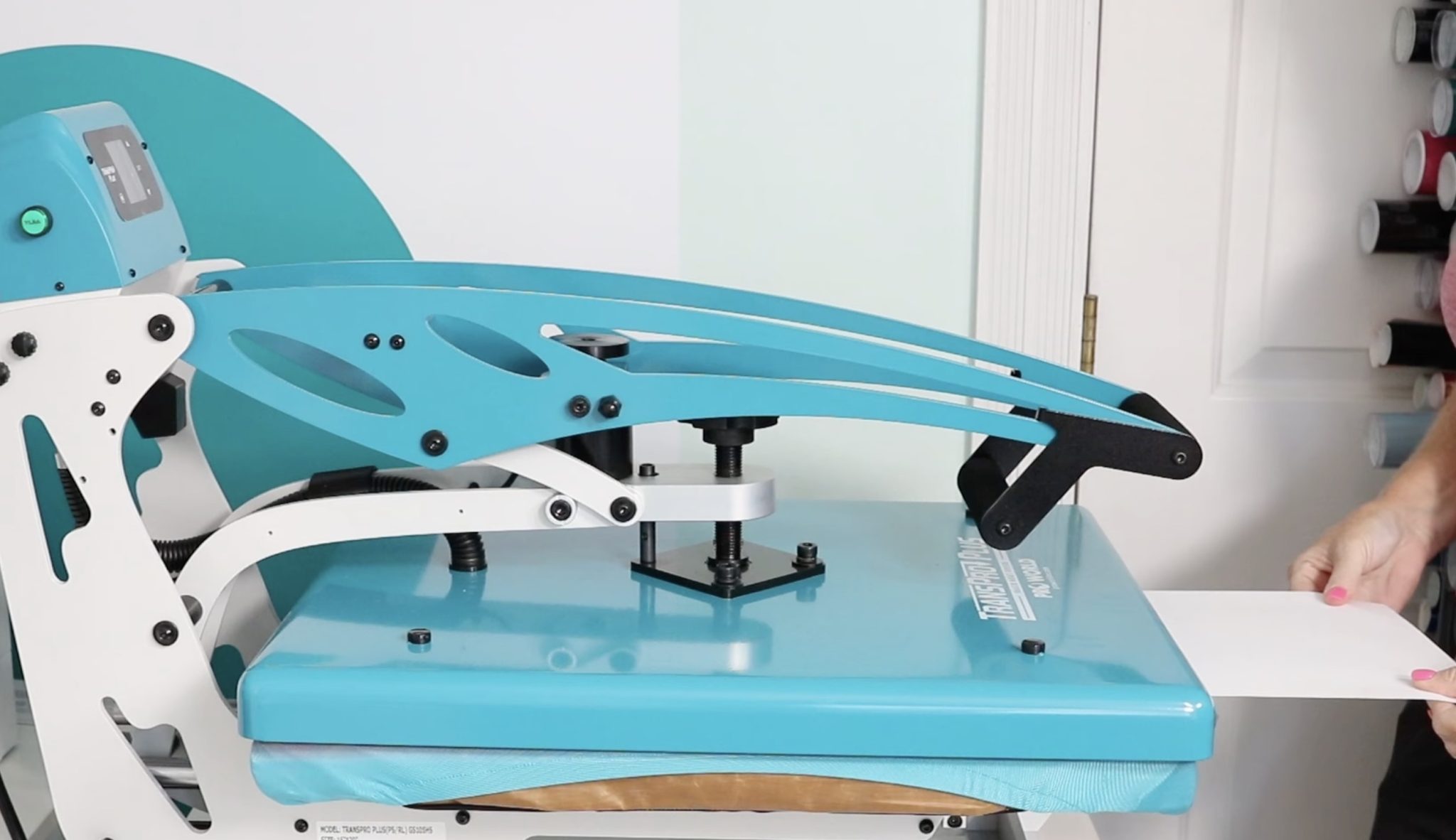
Shut the press. Does it feel effortless to close? Can you easily extract the paper from the press?
Pin
Should your response be affirmative, this is how light pressure feels. Whenever you can effortlessly remove the paper and smoothly close the press, I would deem that light pressure.
We are now going to repeat this method, incrementally tightening the knob each time while assessing the difficulty in closing the press and the ease of removing the paper.
Pin
When you experience some resistance yet can displace the paper, I would classify that as light to medium pressure.
Pin
Proceed with tightening the knob until you cannot extract the paper. When the press becomes difficult to close, and you cannot extract the paper, that would be classified as medium to heavy pressure.
Pin
When you find it impossible to extract the paper, and the press is extremely challenging to shut and open, I would classify that as heavy pressure.
Keep in mind, all this experimentation pertains to a thin sheet of paper. When thicker materials are present, you won’t need to secure the press as tightly.
This method aims to assist you in identifying how your heat press operates under light, medium, and heavy pressure.
Step 3: Paper Test on the Side
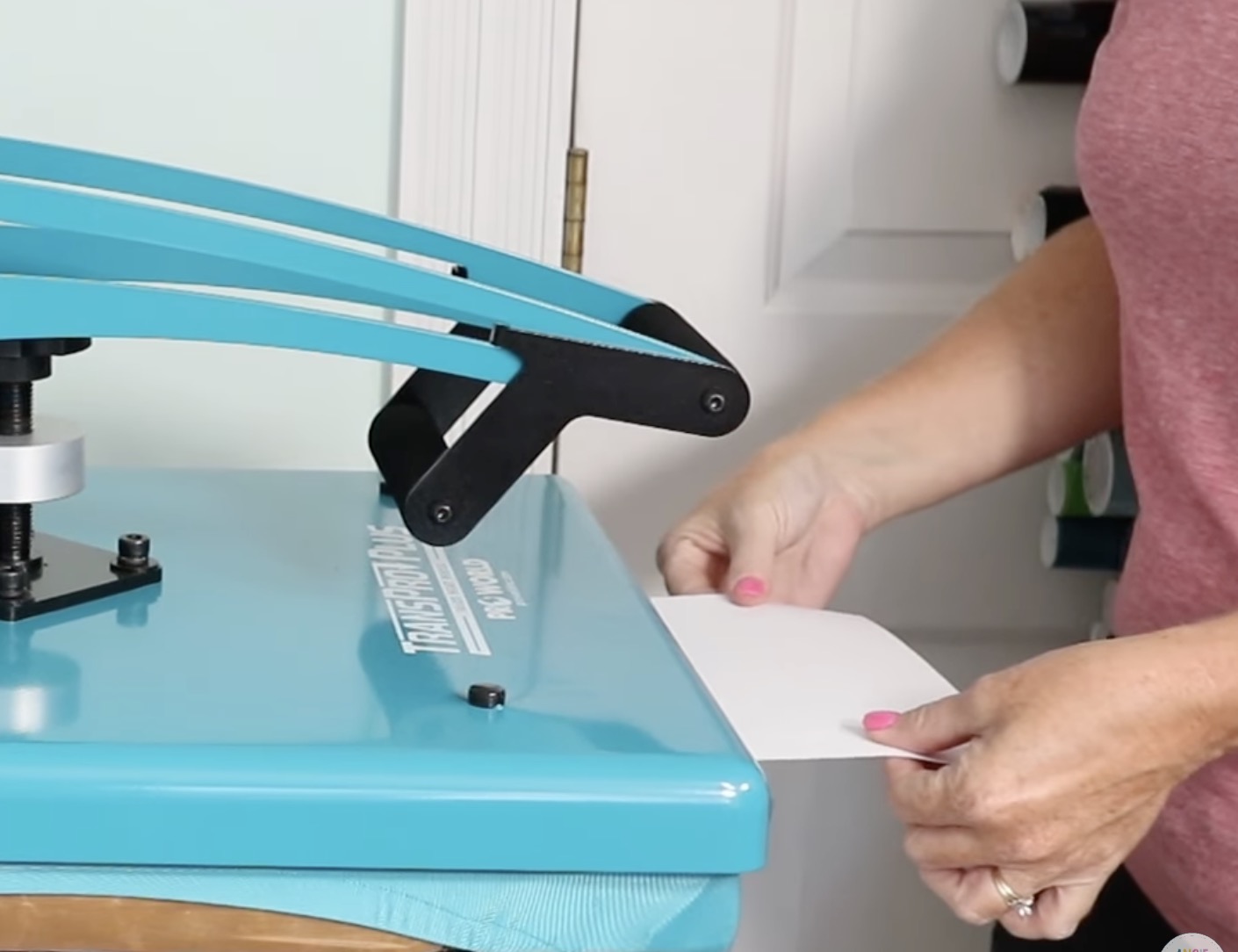
With heavy pressure applied from the front, I am now going to replicate the same test from the side.
My goal is to ensure that regardless of the location of my project within the heat press, it experiences consistent pressure.
With the heat press pressure high enough that the paper cannot be pulled out from the front, I inserted the paper into the side of my press, allowing it to hang out so I could tug on it.
Pin
If the paper is retrievable from the side but not the front, you will want to slightly tighten the knob more.
When I find I can’t remove the paper from either the front or the sides, and the press is very difficult to open and close, we are at heavy pressure.
If I loosen the knob a full turn, I’m now at medium pressure. With the paper reinserted into the heat press, I should be able to retrieve it, though it may prove cumbersome.
If I ease the pressure another full turn and close the press, it should close quite effortlessly, indicating light pressure.
How to Utilize the Heat Press Pressure Settings
Now that I understand how my heat press functions when opening and closing at each of the diverse pressure settings, I can adhere to the suggested setting for the material or blank I am working with.
If I am utilizing HTV that specifies medium pressure, I can modify my press with the blank situated inside until I achieve medium pressure.
If a blank I have requires heavy pressure, I know how that feels, so I can insert the blank and adjust the pressure until it feels heavy in conjunction with that blank.
Understanding the pressure is the initial step to successful heat transfers. The next phase involves knowing when to employ them. Be sure to check your blanks and materials and see what the brands recommend.
Adhering to these guidelines will guarantee optimal results the first time, thus preventing waste of materials and blanks.
What if I possess a Different Heat Press?
The suggestions I provided today pertain to conventional heat presses. If you possess a heat press that automatically sets the pressure, these methods will not apply because the pressure is non-adjustable.
For manual tumbler presses, I did not achieve success with the paper test. What yielded better results for…
Me was navigating by instinct.
If the press is extremely challenging to open and close while the tumbler is inside, you’re exerting significant force. If it’s simple, or perhaps seems like it isn’t sealing completely, you’re operating at a lighter force.
Are You Prepared to Test Your Heat Press Pressure?
I trust these suggestions and techniques assist you in discovering the appropriate pressure for your endeavor.
The more frequently you operate your heat press and recognize the distinction between light and heavy pressure, the simpler it will be in the future to set the pressure accurately for your task.
I trust I have addressed any inquiries you possess regarding configuring your heat press pressure. Should you have further questions, please leave them in the comments, and I’ll gladly respond.
If you're fond of salads, nothing you cultivate will be as essential as leafy greens—the foundation of every fresh, crunchy morsel. However, with supe [...]
I’m incredibly thrilled to present my hand-drawn Grinch Coloring Pages to you. This complimentary coloring page illustrates the Grinch and his diminut [...]
Sample this popcorn cake recipe for a simple dessert that merges sweet popcorn with straightforward components into a delightful, crowd-pleasing indul [...]
Crafting an exquisite perennial flower bed arrangement doesn’t have to be daunting—or pricey. The key to a remarkable, impactful garden lies not just [...]
We use cookies on our website to give you the most relevant experience by remembering your preferences and repeat visits. By clicking “Accept”, you consent to the use of ALL the cookies.
This website uses cookies to improve your experience while you navigate through the website. Out of these, the cookies that are categorized as necessary are stored on your browser as they are essential for the working of basic functionalities of the website. We also use third-party cookies that help us analyze and understand how you use this website. These cookies will be stored in your browser only with your consent. You also have the option to opt-out of these cookies. But opting out of some of these cookies may affect your browsing experience.
Necessary cookies are absolutely essential for the website to function properly. These cookies ensure basic functionalities and security features of the website, anonymously.
Cookie
Duration
Description
cookielawinfo-checbox-analytics
11 months
This cookie is set by GDPR Cookie Consent plugin. The cookie is used to store the user consent for the cookies in the category "Analytics".
cookielawinfo-checbox-functional
11 months
The cookie is set by GDPR cookie consent to record the user consent for the cookies in the category "Functional".
cookielawinfo-checbox-others
11 months
This cookie is set by GDPR Cookie Consent plugin. The cookie is used to store the user consent for the cookies in the category "Other.
cookielawinfo-checkbox-necessary
11 months
This cookie is set by GDPR Cookie Consent plugin. The cookies is used to store the user consent for the cookies in the category "Necessary".
cookielawinfo-checkbox-performance
11 months
This cookie is set by GDPR Cookie Consent plugin. The cookie is used to store the user consent for the cookies in the category "Performance".
viewed_cookie_policy
11 months
The cookie is set by the GDPR Cookie Consent plugin and is used to store whether or not user has consented to the use of cookies. It does not store any personal data.
Functional cookies help to perform certain functionalities like sharing the content of the website on social media platforms, collect feedbacks, and other third-party features.
Performance cookies are used to understand and analyze the key performance indexes of the website which helps in delivering a better user experience for the visitors.
Analytical cookies are used to understand how visitors interact with the website. These cookies help provide information on metrics the number of visitors, bounce rate, traffic source, etc.
Advertisement cookies are used to provide visitors with relevant ads and marketing campaigns. These cookies track visitors across websites and collect information to provide customized ads.