Graywash and Whitewash
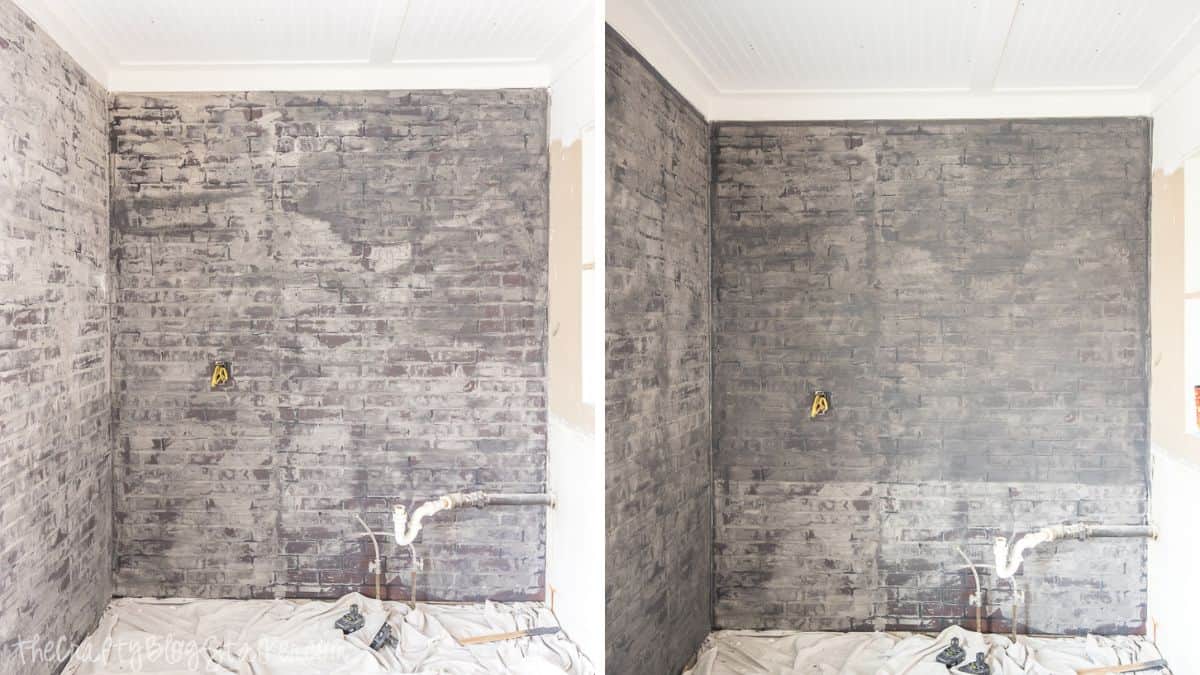
After all the sheetrock compound had cured, I executed a straightforward gray wash using a diluted paint blend. (
I combined approximately 1 part Behr Cracker Pepper paint with 6 parts water, mixed it well, applied it with a brush, and promptly wiped it down using a lint-free cloth.
Upon completion, I had applied 2 layers of the gray wash. You can notice the variations below.
Nevertheless, I would probably recommend applying just 1 layer, since I ultimately ended up dry-brushing over the second coat anyway.
Once the graywash had set, I employed a small paint roller to apply a diluted white wash.
I maintained the same ratio of Reserved White paint to water. I simply mixed it in a paint tray and splashed it on.
Again, this process is quite artistic, so there is no precise technique.
After rolling on the paint, I took a lint-free cloth and blended it all together to eliminate any paint drips. You can also use your paint scraper to distress the paint for a more vintage appearance.
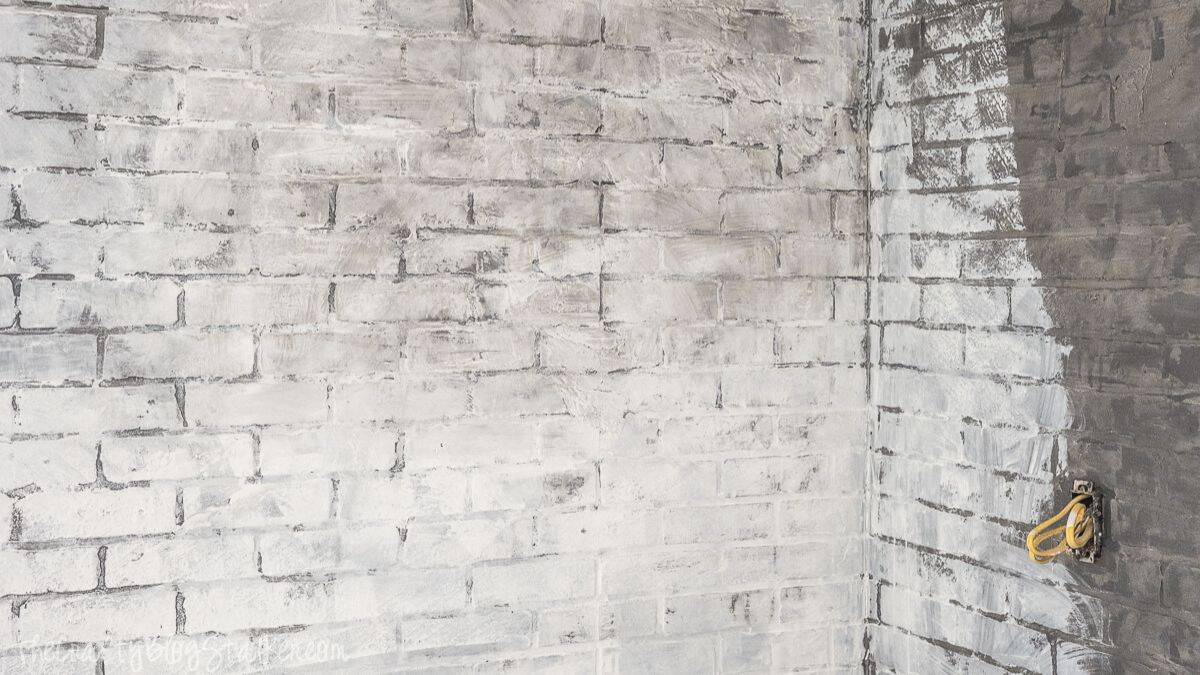
Alright, after I applied the whitewash, I wasn’t particularly pleased with the outcome, so I began dipping my rag back into the gray wash and rubbing it around. You can observe some of that progress in the photo below.
After applying the gray wash once more, I just wasn’t satisfied. It appeared too chaotic and had a bluish hue.
If this had been on genuine brick, I believe it would have played more favorably to my advantage. The brick dimensions were becoming somewhat obscured since I was dealing with faux brick panels.